

Researchers investigating the triple-hormone receptor agonist LY3437943 often analyze how different levels of a retatrutide dosage affect weight loss and metabolic markers. In global clinical trials, this investigational peptide targeting GIP, GLP-1, and Glucagon receptors has shown highly dose-dependent effects on body weight reduction, lipid profiles, and glycemic control. Understanding the progression of these experimental doses in published clinical literature provides crucial insights into how this next-generation therapeutic operates in controlled scientific environments.
Understanding the Retatrutide Dosage in Clinical Trials
In the landmark Phase 2 clinical trial published in The New England Journal of Medicine in 2023, researchers evaluated several dosing cohorts to determine the tolerability, safety, and efficacy of retatrutide in adult patients. The double-blind, randomized study evaluated participants with obesity or overweight, assigning them to receive weekly subcutaneous injections of various doses, ranging from a minimal 1 mg up to a maximum of 12 mg, alongside a placebo group. Investigators consistently observed that escalating the dose gradually over several weeks was critical to mitigating gastrointestinal side effects, which are highly characteristic of incretin-based mimetics.
The escalating titration schedule typically initiated at a low base of 2 mg per week, followed by incremental step-ups every four weeks to reach target maintenance doses of 4 mg, 8 mg, or 12 mg. By mapping out these specific increments, scientific observers can better understand how the human endocrine system adapts to triple-receptor agonism without triggering acute adverse events. For laboratory researchers reviewing these complex clinical protocols, utilizing a structured retatrutide dosage reference helps contextualize the escalation schedules and cohort-specific data employed across various trial phases.
The Mechanism of Triple Agonism
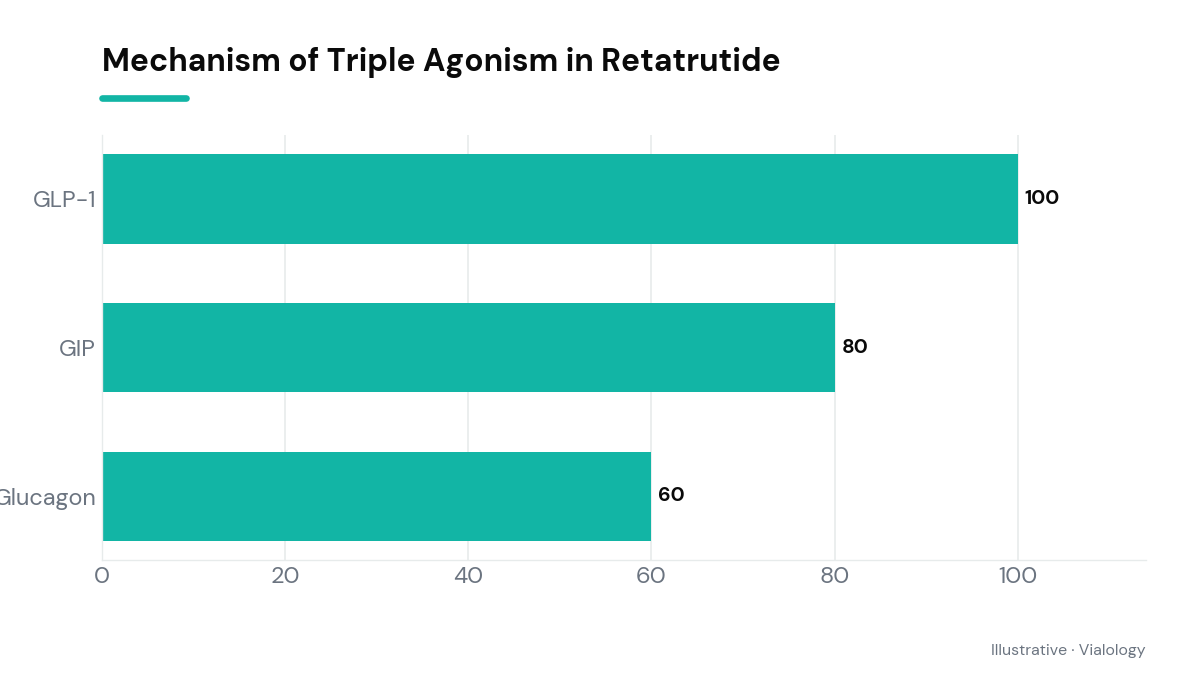
Retatrutide distinguishes itself from existing metabolic therapies like semaglutide and tirzepatide by targeting three distinct nutrient-stimulation pathways simultaneously. It acts as a highly potent agonist at the glucose-dependent insulinotropic polypeptide (GIP), glucagon-like peptide-1 (GLP-1), and glucagon (GCG) receptors. This triple-action profile, frequently described in literature as a ‘tri-agonist’ or ‘triple G,’ allows the compound to influence insulin secretion, delay gastric emptying, and promote sustained energy expenditure via direct glucagon pathway activation in the liver and adipose tissues.
Preclinical animal models and early-stage human trials suggest that the distinct synergy between these three distinct biological pathways may explain the heightened metabolic efficacy observed at higher dose levels compared to mono- or dual-agonists. While GLP-1 and GIP primarily regulate satiety, appetite suppression, and glucose-dependent insulin release, the addition of glucagon receptor agonism increases lipolysis, energy expenditure, and thermogenesis, presenting a multi-faceted approach to obesity and metabolic syndrome research.

Safety Profile and Dose-Dependent Side Effects
As with other incretin-based investigational agents currently under scientific review, the overall safety profile of retatrutide in clinical research is closely linked to the speed of titration and the final target dose administered. The most frequently reported adverse effects in the 2023 clinical trials were gastrointestinal in nature, including mild-to-moderate nausea, diarrhea, vomiting, and temporary constipation. These symptoms were notably more prevalent during the initial dose-escalation phases and reached their peak incidence at the highest evaluated maintenance dose of 12 mg.
Beyond gastrointestinal events, researchers also closely monitored transient increases in resting heart rate, a known physiological response associated with both GIP and glucagon receptor activation. These heart rate elevations typically peaked at around week 24 of the Phase 2 trials before gradually declining, highlighting the critical importance of long-term observation in ongoing, larger-scale Phase 3 trials to fully characterize the peptide’s cardiovascular safety profile.
Future Horizons in Retatrutide Clinical Research
As the scientific community looks beyond Phase 2 data, the ongoing Phase 3 clinical trials, known collectively as the TRIUMPH program, are designed to further evaluate the long-term safety, tolerability, and metabolic outcomes of the peptide across larger, more diverse patient populations. These expansive trials are studying the compound’s effects not only on obesity but also on related comorbidities such as type 2 diabetes, non-alcoholic fatty liver disease (NAFLD), and obstructive sleep apnea.
By tracking these outcomes across different demographic cohorts and variable dosing regimens, researchers hope to establish a clearer picture of how triple-hormone agonism compares to standard-of-care treatments over multi-year periods. Until these Phase 3 trials conclude and regulatory bodies complete their formal evaluations, retatrutide remains strictly an investigational compound restricted to clinical trial settings and scientific research.
Related on Vialology
Frequently asked questions
Is retatrutide currently approved by the FDA?
No, retatrutide is an investigational compound that is currently undergoing Phase 3 clinical trials and has not yet received approval from the FDA for public or prescription use.
What is the primary difference between retatrutide and tirzepatide?
While tirzepatide is a dual GIP and GLP-1 receptor agonist, retatrutide is a triple agonist that targets the GIP, GLP-1, and glucagon receptors to potentially enhance metabolic rate.
How were doses administered in the Phase 2 trials?
In clinical research settings, retatrutide was administered via weekly subcutaneous injections, starting with a low titration dose to assess tolerance before escalating to higher maintenance levels.
Educational use only. Vialology publishes journalistic and educational content about peptide science. Nothing here is medical advice, diagnosis, or treatment, and nothing should be taken as an endorsement to use any substance. Many peptides discussed are experimental and are not approved by the FDA for human use. Always consult a licensed healthcare professional before making any health decision.