
To evaluate the purity of research compounds, scientists must ask: What Does “ISO 17025 Tested” Really Guarantee (and What It Doesn’t)? While many distributors display this badge as an ultimate seal of quality, the actual meaning of the accreditation is often misunderstood. By breaking down the technical realities of laboratory standards, we can separate genuine analytical rigor from clever marketing.
Understanding the Baseline of ISO/IEC 17025 Accreditation
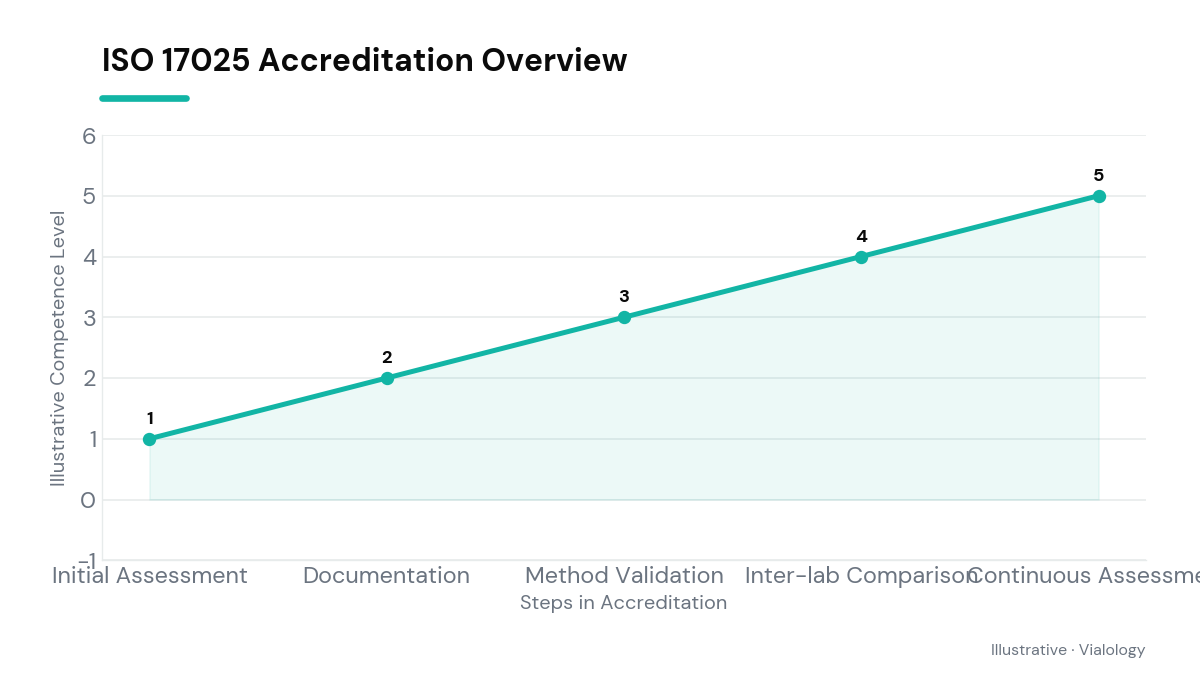
To comprehend the value of an ISO 17025 certificate, one must first look at what the International Organization for Standardization actually measures. Unlike general quality management system certifications like ISO 9001, which focus on administrative processes, ISO 17025 specifically assesses the technical competence of testing and calibration laboratories. It evaluates whether a laboratory has the correct equipment, trained personnel, validated testing methods, and rigorous reporting procedures to generate precise, repeatable, and globally recognized analytical data.
In the context of peptide analysis, this means an accredited lab has been independently audited by a third-party accreditation body to ensure its high-performance liquid chromatography (HPLC) and mass spectrometry (MS) systems are calibrated correctly. However, a key distinction remains: the standard applies to the laboratory’s operational capability and testing environment, not to the specific batch of a compound sitting on a supplier’s shelf. An accredited lab can perform a flawless test, but it does not oversee the manufacturing process itself.
What Does “ISO 17025 Tested” Really Guarantee (and What It Doesn’t)?
When a peptide batch is sent to an accredited facility, the resulting certificate of analysis (CoA) offers high assurance that the chemical identity and purity levels reported are accurate. Because the lab must adhere to strict validation protocols and standard operating procedures, researchers can trust that a 98% purity reading actually means 98%, rather than an inflated figure produced by uncalibrated machinery. This technical reliability is the cornerstone of understanding what testing does and doesn’t guarantee in a scientific setting.
What it does not guarantee is the overall safety, sterile nature, or biological efficacy of the compound when used in a research model. ISO 17025 testing is a point-in-time snapshot of a specific sample; it cannot prevent subsequent contamination, degradation during transit, or guarantee that the supplier hasn’t altered the batch after testing occurred. Furthermore, the accreditation itself belongs to the testing lab, not the peptide brand selling the product, meaning consumers must trace the lineage of the test.
The Critical Distinction Between Lab Competence and Product Quality
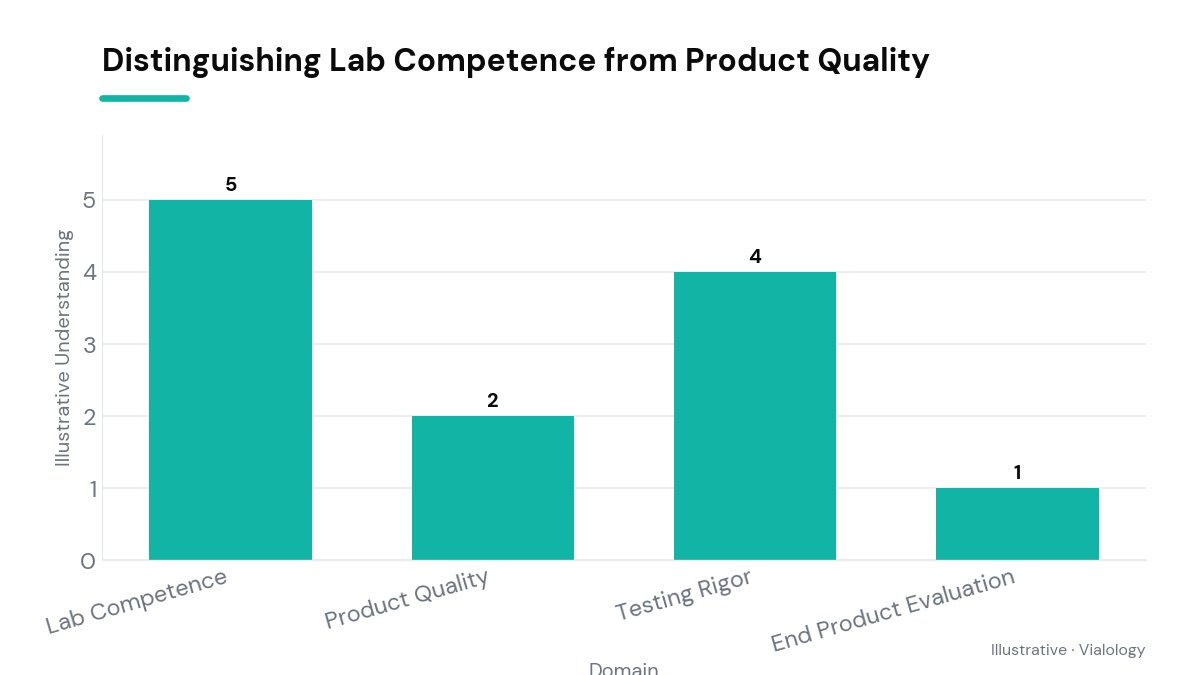
It is common for third-party distributors to market their research chemicals as “ISO 17025 certified.” This is technically a misnomer, as only testing facilities can hold this accreditation, whereas products themselves are merely tested by an accredited lab. A dishonest distributor could theoretically submit a cherry-picked, pristine sample to an ISO 17025 laboratory to receive a flawless CoA, while distributing lower-quality batches to customers. This means that a badge alone is not a substitute for a transparent supply chain.
To mitigate this risk, analytical chemists recommend looking for third-party testing setups where samples are acquired blindly from retail inventory rather than provided directly by the manufacturer. True transparency requires checking the certificate’s verification code directly with the issuing accredited laboratory, ensuring the document has not been altered or falsified to represent a completely different batch of peptides. This level of diligence ensures that the data on paper matches the actual substance in the vial.
Reading Beyond the Badge in Peptide Research
Ultimately, relying solely on an ISO logo on a website homepage is insufficient for rigorous scientific inquiry. Researchers must learn to read the actual analytical reports, looking for clear chromatograms, defined baseline noise, and explicit callouts of the sample preparation methods. An ISO 17025 accredited laboratory’s report will always include specific details such as column types, solvent gradients, and detection wavelengths, which allow other scientists to replicate the analysis and verify the results.
As research into therapeutic peptides continues to expand globally, demanding higher standards of analytical verification becomes paramount. While the ISO 17025 designation is a powerful tool for verifying that a laboratory’s data is technically sound, it remains just one piece of the broader quality assurance puzzle that researchers must piece together. By asking deeper questions about testing methodologies and lab credentials, researchers can better navigate the complexities of peptide science.
Related on Vialology
Frequently asked questions
What is the main difference between ISO 9001 and ISO 17025?
While ISO 9001 evaluates a company’s general quality management processes, ISO 17025 specifically assesses the technical competence and accuracy of a testing laboratory’s equipment and personnel.
Can a peptide product itself be ISO 17025 certified?
No, individual products cannot be ISO 17025 certified; rather, the laboratory that analyzes the product holds the accreditation for its testing methodologies.
How can researchers verify if a peptide test report is authentic?
Researchers can verify a certificate of analysis by cross-referencing the report number directly with the accredited laboratory that performed the testing.
Does ISO 17025 testing ensure a compound is safe for human clinical trials?
No, ISO 17025 testing only verifies the chemical identity and purity of a sample; it does not constitute clinical safety, toxicology clearance, or regulatory approval.
Educational use only. Vialology publishes journalistic and educational content about peptide science. Nothing here is medical advice, diagnosis, or treatment, and nothing should be taken as an endorsement to use any substance. Many peptides discussed are experimental and are not approved by the FDA for human use. Always consult a licensed healthcare professional before making any health decision.