

Understanding the clinical progression of GLP-1 receptor agonists is crucial for modern metabolic science, which is why a comprehensive semaglutide dosage chart is a vital tool for researchers studying this peptide’s therapeutic index. By reviewing how dosing escalates in clinical protocols, investigators can better analyze its physiological impacts on glycemic control and appetite regulation. This reference guide explores the standard escalation schedules used in clinical trials and peer-reviewed literature.
The Science of GLP-1 Receptor Agonists
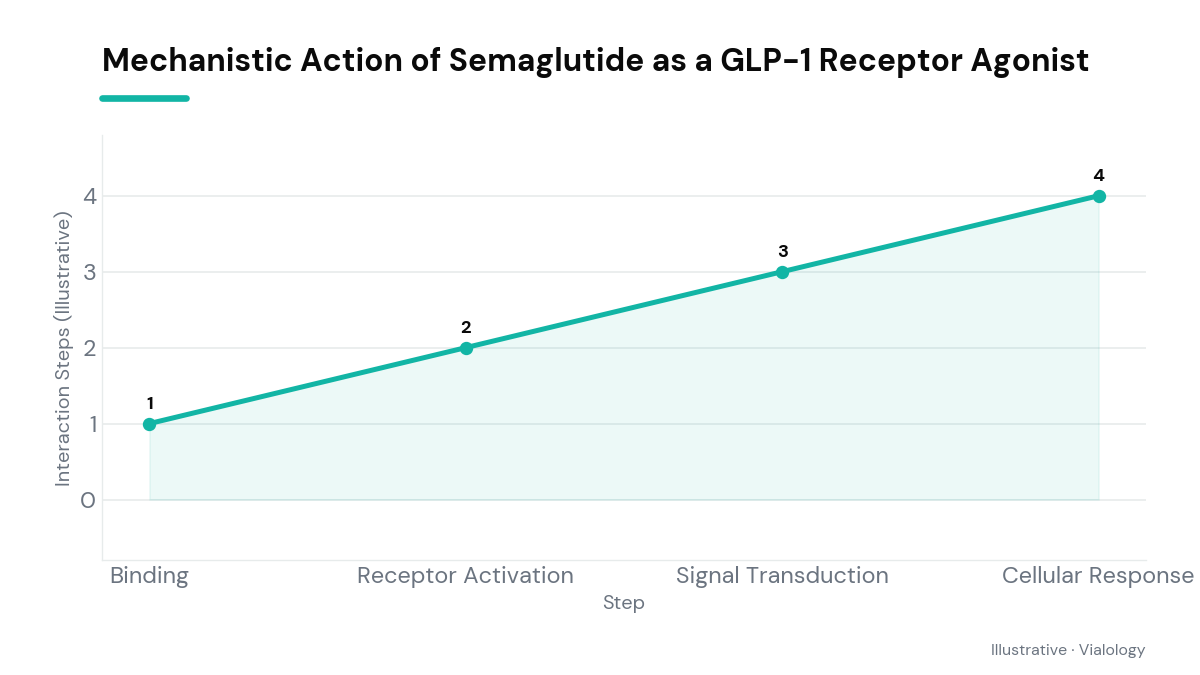
Semaglutide operates as a synthetic analog of the naturally occurring peptide hormone glucagon-like peptide-1 (GLP-1), which is secreted by L-cells in the distal gut in response to nutrient ingestion. By sharing a 94% structural homology with native human GLP-1, semaglutide targets the GLP-1 receptor to stimulate insulin secretion in a glucose-dependent manner while simultaneously suppressing glucagon release. In clinical research settings, understanding how this molecular mechanism scales with concentration is key to analyzing its systemic pharmacological kinetics.
To explore how researchers structure these dosing paradigms in preclinical and clinical contexts, scientists often consult peer-reviewed resources such as Frontier’s Semaglutide research to map out receptor-binding affinity and half-life dynamics. This structural stability is primarily achieved through a specific modification at position 8 (alanine to alpha-aminoisobutyric acid) and the addition of a C-18 fatty diacid chain, allowing the peptide to resist enzymatic degradation by dipeptidyl peptidase-4 (DPP-4) and remain active in the bloodstream far longer than endogenous GLP-1.
Interpreting the Semaglutide Dosage Chart in Clinical Trials
In human clinical trials, researchers rarely introduce the target therapeutic concentration of semaglutide abruptly. Instead, a standard semaglutide dosage chart illustrates a gradual titration schedule designed to mitigate gastrointestinal side effects and establish metabolic tolerance over several weeks. Typically, clinical trial designs initiate subjects at a low introductory phase of 0.25 mg per week, maintaining this level for four weeks to allow the peptide’s steady-state concentration to stabilize in plasma.
Following the introductory period, scientific protocols usually dictate a step-wise escalation. The dosage chart outlines transitions to 0.5 mg, 1.0 mg, and eventually higher therapeutic levels such as 1.7 mg or 2.4 mg per week, depending on the specific trial endpoints—whether the focus is glycemic regulation or weight homeostasis. This methodical escalation is highly documented in large-scale clinical programs like the STEP (Semaglutide Treatment Effect in People with obesity) trials, where tolerance and efficacy were carefully mapped against these specific titration increments.

Pharmacokinetics and Half-Life Considerations
To fully comprehend the rationale behind the weekly titration intervals shown on a standard semaglutide dosage chart, researchers must analyze the peptide’s pharmacokinetics. Semaglutide boasts an elimination half-life of approximately one week (165 hours), which makes weekly administration highly effective for maintaining stable plasma concentrations. When a dose is administered, peak concentration is typically achieved between 1 to 3 days post-injection, after which a slow decay curve begins.
Because of this prolonged half-life, steady-state concentrations are not reached immediately; it takes approximately 4 to 5 weeks of consistent weekly dosing at a single level before the circulating peptide levels equilibrate. Introducing an escalation before this steady state is reached can distort pharmacokinetic data and increase the incidence of adverse gastrointestinal reactions, which is why clinical researchers strictly adhere to the designated four-week intervals before adjusting exposure.
Physiological Impact and Safety Endpoints in Research
In academic literature, monitoring the endpoints associated with each tier of the semaglutide dosage chart involves tracking multiple biological biomarkers. Beyond weight changes and hemoglobin A1c (HbA1c) reductions, investigators measure changes in gastric emptying rates, systemic inflammatory markers like high-sensitivity C-reactive protein (hs-CRP), and cardiovascular risk profiles. Higher doses are frequently associated with more pronounced delays in gastric emptying, which directly correlates with the feelings of satiety reported in clinical cohorts.
Safety profiles remain a primary focus of academic study during these titration steps. While the peptide is generally well-tolerated at lower titration phases, higher levels in the dosage chart are occasionally associated with transient, mild-to-moderate gastrointestinal events such as nausea or diarrhea. Researchers must balance these secondary outcomes against the metabolic advantages observed at the peak doses, providing a comprehensive view of how peptide concentration dictates both therapeutic efficacy and tolerability.
Related on Vialology
Frequently asked questions
What is the purpose of a semaglutide titration schedule?
The primary purpose of a titration schedule is to gradually acclimatize the biological system to the peptide, thereby minimizing potential gastrointestinal side effects and allowing researchers to safely monitor patient tolerance as the dosage increases.
How long does it take for semaglutide to reach steady-state plasma levels?
Due to its long elimination half-life of approximately 165 hours, it generally takes about 4 to 5 weeks of consistent weekly administration for semaglutide to reach steady-state concentrations in the bloodstream.
What clinical trials established the standard dosing escalations?
The step-wise dosing progression was largely established and validated through the extensive STEP and SUSTAIN clinical trial programs, which evaluated the peptide’s efficacy and safety across various cohorts.
Educational use only. Vialology publishes journalistic and educational content about peptide science. Nothing here is medical advice, diagnosis, or treatment, and nothing should be taken as an endorsement to use any substance. Many peptides discussed are experimental and are not approved by the FDA for human use. Always consult a licensed healthcare professional before making any health decision.