
The debate surrounding semaglutide vs ozempic has evolved from a clinical discussion into a major public health conversation, particularly as demand for GLP-1 receptor agonists continues to outstrip global supply. This unprecedented shortage has led to a surge in interest around compounded alternatives, which are prepared by specialized pharmacies rather than the drug’s original manufacturer. For researchers and biohackers looking to understand the underlying science, navigating the differences between these formulations requires a careful look at regulatory standards, active pharmaceutical ingredients, and manufacturing consistency.
Understanding the GLP-1 Mechanism: Semaglutide vs Ozempic and Compounded Alternatives
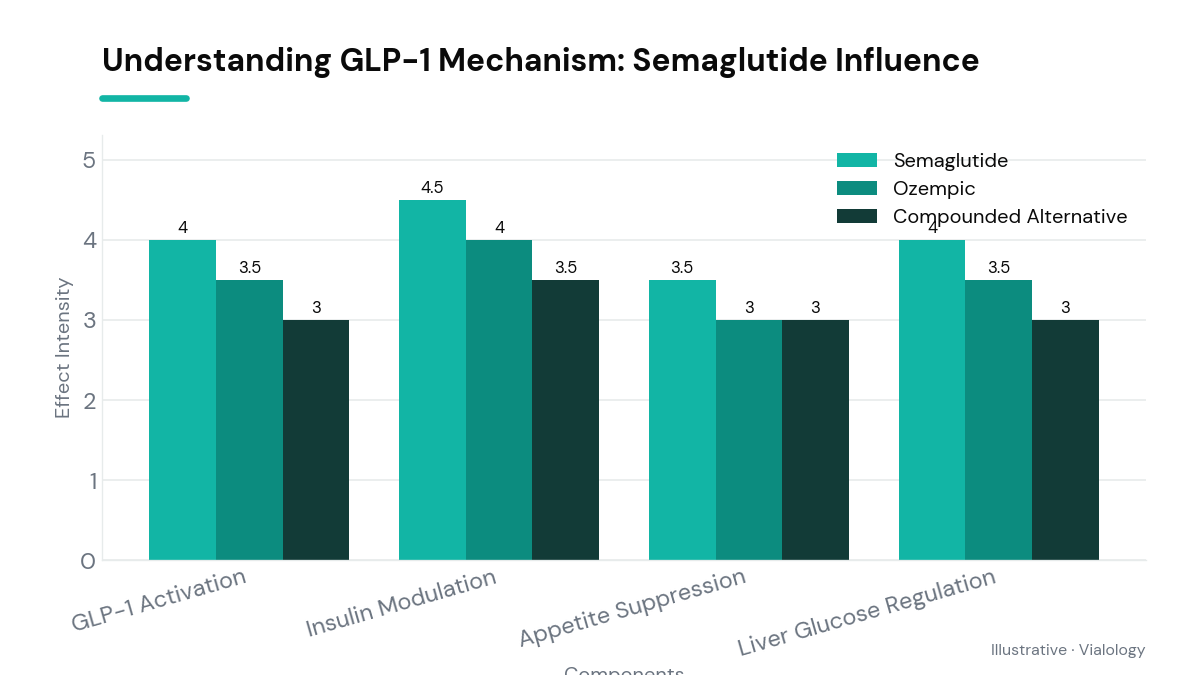
At its core, semaglutide is a synthetic peptide that mimics glucagon-like peptide-1 (GLP-1), a hormone naturally secreted by the intestines in response to food intake. By binding to GLP-1 receptors, the peptide stimulates insulin secretion, suppresses glucagon release, and slows gastric emptying. Clinical studies, such as the landmark STEP trials published in 2021, demonstrated that this mechanism has profound effects on metabolic regulation. While the brand-name medication Ozempic contains a highly standardized, proprietary formulation of this peptide, compounded versions attempt to replicate the active pharmaceutical ingredient (API) in independent compounding facilities.
The primary scientific distinction lies in how these formulations are constructed and verified. While the branded version is produced under strict, single-manufacturer patent controls, compounded alternatives are often reconstituted using bulk peptide powders. Researchers studying these compounds must carefully evaluate the chemical form, as some compounding pharmacies utilize semaglutide sodium or semaglutide acetate salt forms rather than the free-base form of the peptide used in clinical trials, which may alter its solubility and receptor affinity.
The Regulatory Reality of Compounding Pharmacies
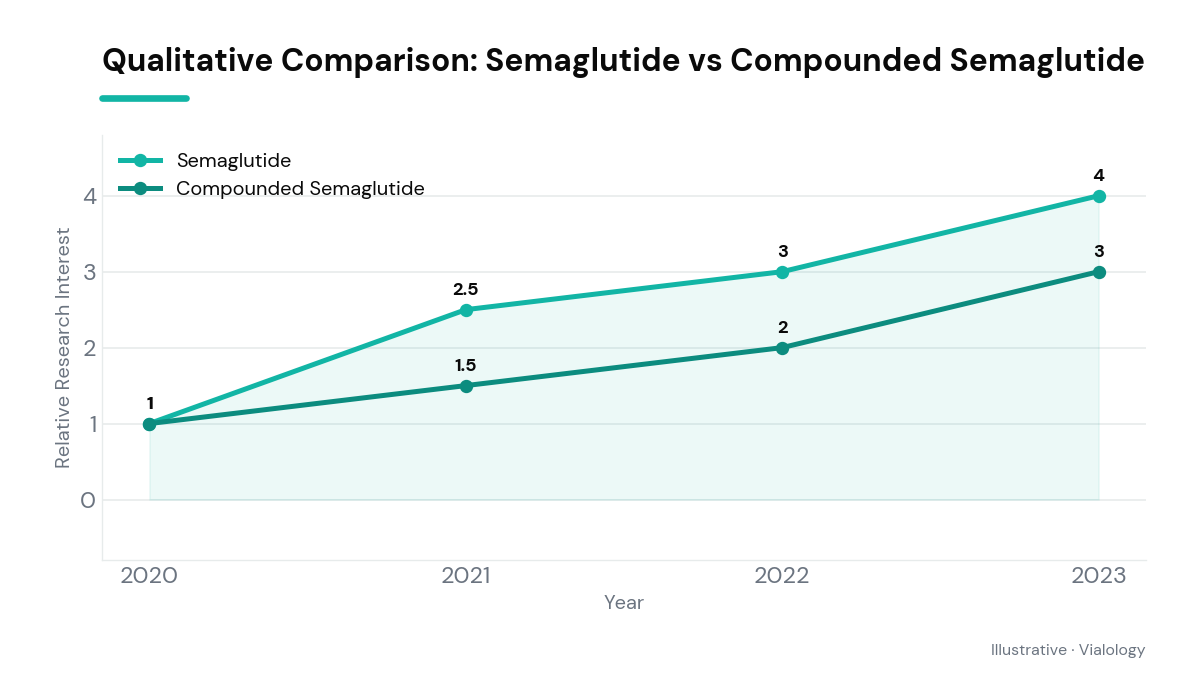
Compounding is a legal practice in the United States, regulated primarily under sections 503A and 503B of the Federal Food, Drug, and Cosmetic Act. During official drug shortages, these specialized pharmacies are permitted to prepare copies of commercially available drugs to meet public demand. However, unlike the multi-phase clinical trial oversight required for the patented formulation, compounded products do not undergo pre-market review by the FDA for safety, efficacy, or stability. This means that while the active peptide sequence is chemically identical in theory, the final preparation’s sterility, potency, and purity can vary between different compounding facilities.
This regulatory gap highlights the importance of sourcing documentation when analyzing compounded vs branded semaglutide in any research setting. Analytical testing of compounded samples has occasionally revealed discrepancies in peptide concentration, with some batches deviating from the labeled dosage. Researchers emphasize that third-party testing, such as High-Performance Liquid Chromatography (HPLC) and Mass Spectrometry (MS), remains the gold standard for verifying that a compounded peptide matches the rigorous purity profile of the branded counterpart.

Chemical Salts vs. Base Peptides: A Crucial Scientific Difference
One of the most critical technical nuances in the semaglutide landscape is the distinction between semaglutide base and its salt forms. The FDA has repeatedly issued warnings regarding the use of semaglutide sodium and semaglutide acetate in compounded preparations. These salt forms are different chemical entities than the base peptide evaluated in major clinical trials, and their safety profiles have not been established in human research. Academic researchers note that altering the molecular salt form can change the peptide’s pharmacokinetic profile, potentially affecting how the molecule behaves when interacting with cellular receptors in vitro or in vivo.
Furthermore, the inactive ingredients and preservatives used in compounded formulations can influence peptide stability. Branded semaglutide is formulated with specific buffers and preservatives designed to maintain peptide integrity over prolonged storage periods. In contrast, compounded versions may use different bacteriostatic water formulations or compounding vehicles, which could accelerate peptide degradation if not stored under precise thermal conditions.
What Research Protocols Reveal About Peptide Consistency
In laboratory settings, consistency is paramount to ensuring reproducible experimental results. When scientists evaluate the physiological effects of GLP-1 receptor agonists, even minor impurities or variations in peptide concentration can introduce significant confounding variables. Peer-reviewed literature emphasizes that research-grade peptides must meet a purity threshold of at least 98% to be considered viable for analytical study. Because compounding pharmacies are focused on clinical preparation rather than strict laboratory analytical standards, their outputs can sometimes exhibit batch-to-batch variability that is undesirable for rigorous scientific inquiry.
Ultimately, the choice between analyzing branded semaglutide and compounded alternatives comes down to a trade-off between absolute standardization and accessibility. While the branded product provides a guaranteed, highly regulated chemical baseline, compounded formulations offer a window into how the broader pharmaceutical supply chain adapts to unprecedented demand. For the scientific community, continuing to monitor and test these compounded variants is essential to understanding the real-world safety and efficacy of distributed peptide therapies.
Related on Vialology
Frequently asked questions
What is the main difference between semaglutide and compounded semaglutide?
Branded semaglutide is a standardized, FDA-approved formulation produced under patent by a single manufacturer, whereas compounded semaglutide is prepared by independent pharmacies using bulk ingredients, which are not subject to the same pre-market FDA approval processes.
Is compounded semaglutide safe for laboratory research?
The safety and purity of compounded semaglutide depend entirely on the compounding pharmacy’s standards, making rigorous third-party testing like HPLC essential to verify its chemical profile before research use.
Why does the FDA warn against semaglutide sodium?
The FDA warns against semaglutide sodium because it is a different salt form than the base peptide used in approved clinical trials, and its safety, efficacy, and biological behavior have not been formally established.
Educational use only. Vialology publishes journalistic and educational content about peptide science. Nothing here is medical advice, diagnosis, or treatment, and nothing should be taken as an endorsement to use any substance. Many peptides discussed are experimental and are not approved by the FDA for human use. Always consult a licensed healthcare professional before making any health decision.