
When exploring the scientific literature surrounding fat-metabolism research, understanding the historical context of aod-9604 dosage parameters is essential for evaluating its potential mechanisms. Developed originally as a modified fragment of human growth hormone, specifically isolating the C-terminal end, this synthetic peptide has been the subject of numerous preclinical and clinical investigations. By examining how researchers have structured their trials, we can better appreciate how this compound interacts with adipose tissue without the broader endocrine effects of systemic growth hormone.
The Origins and Molecular Profile of AOD-9604
AOD-9604, short for Advanced Obesity Drug 9604, is a 16-amino acid peptide fragment representing residues 177–191 of the human growth hormone (hGH) polypeptide chain, with an additional tyrosine residue at the N-terminal end to stabilize the structure. Developed in the late 1990s by researchers searching for a way to replicate the lipolytic properties of growth hormone without its associated insulin resistance, the peptide targets key pathways of fat accumulation. Early biochemical assays indicated that this specific fragment could stimulate lipid breakdown in isolated adipose tissues, sparking substantial interest in metabolic research circles.
Unlike intact growth hormone, which acts globally on various tissues and can stimulate insulin-like growth factor 1 (IGF-1) production, AOD-9604 was designed to be highly selective. In laboratory models, it shows no affinity for the growth hormone receptor itself, meaning it does not stimulate longitudinal growth or impair glucose tolerance. This distinct separation of metabolic benefits from somatogenic risks remains a central point of study for researchers seeking to isolate the specific pathways that regulate lipid clearance and energy expenditure.
Evaluating AOD-9604 Dosage in Clinical Models
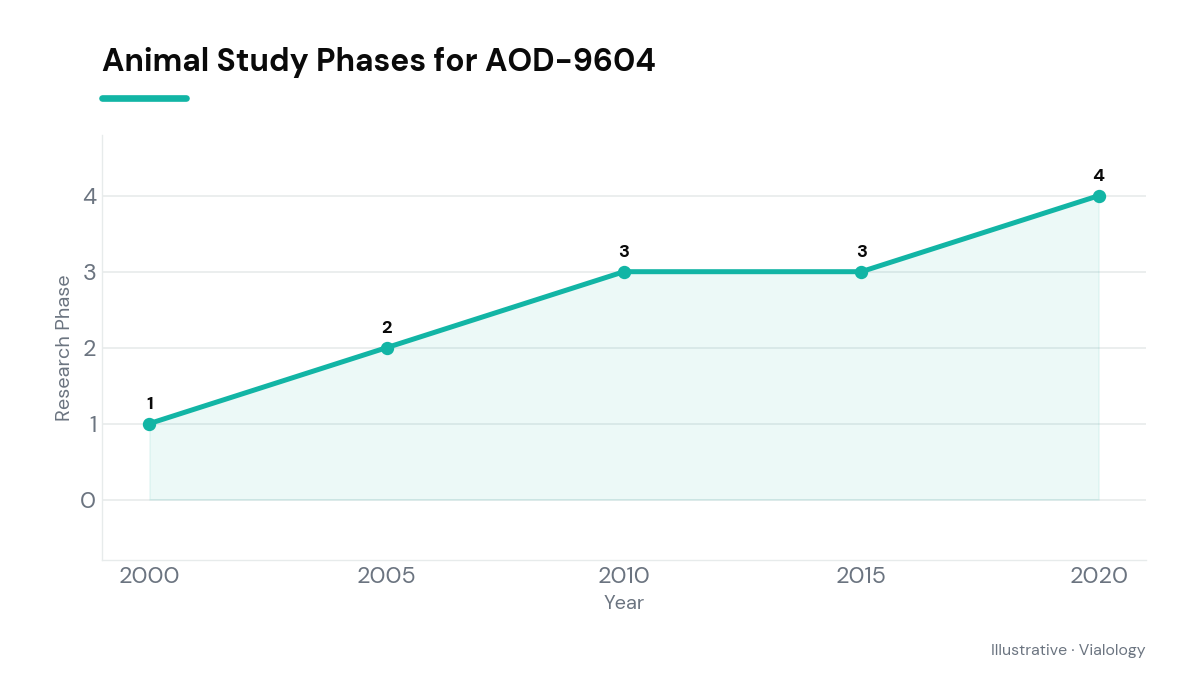
Much of what is known about the quantitative administration of this peptide comes from early animal studies and subsequent human clinical trials conducted in the early 2000s. Researchers seeking to establish a baseline for efficacy analyzed fat-metabolism dosage data obtained from rodent models, where daily subcutaneous injections demonstrated a dose-dependent reduction in body weight and adipose tissue mass. In these animal cohorts, researchers typically scaled doses based on metabolic rate, noting that the peptide consistently stimulated lipolytic pathways without altering overall food intake or causing systemic adverse events.
Transitioning from animal models to human subjects, a series of randomized, double-blind, placebo-controlled trials were conducted to evaluate safety, tolerability, and efficacy. These human studies generally evaluated oral and injectable formulations across a range of daily quantities, specifically examining cohorts taking doses such as 1 milligram, 5 milligrams, and up to 30 milligrams per day. While early Phase II trials reported promising tolerability profiles and localized fat-reduction trends, the broader clinical development program was eventually halted after the compound failed to meet its primary efficacy endpoints consistently across large diverse patient populations.

Mechanisms of Action: How AOD-9604 Interacts with Fat Cells
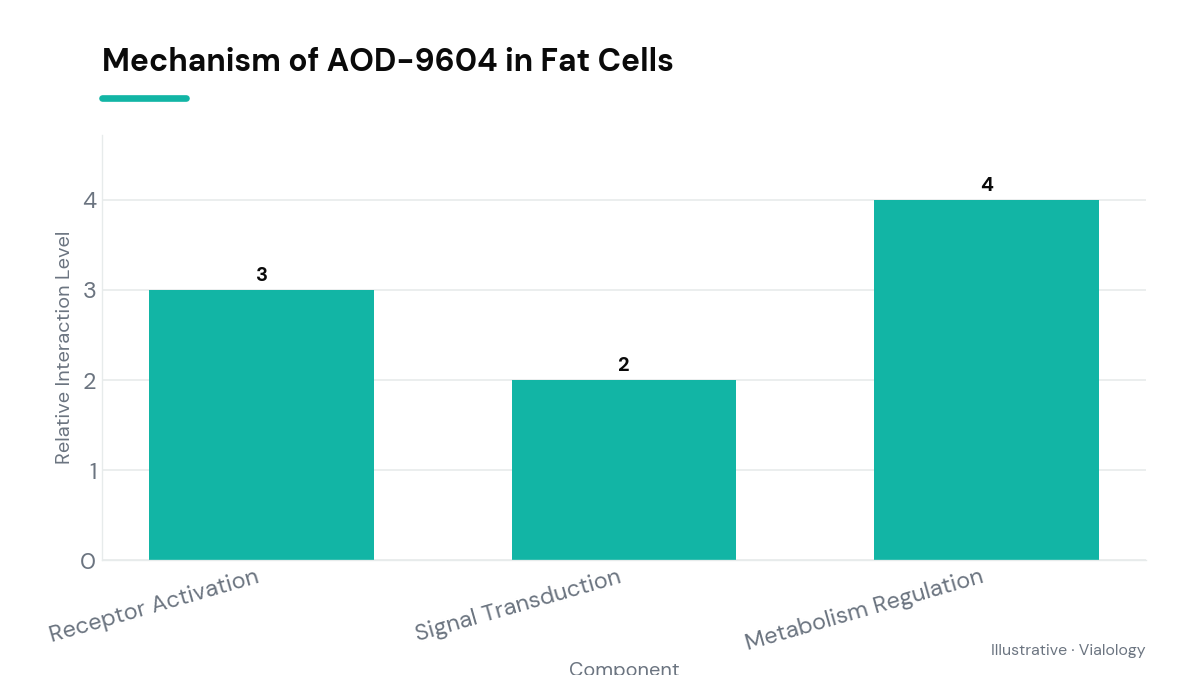
To understand the molecular underpinnings of this research peptide, scientists have focused on how it interacts with adipocytes—the cells primary responsible for storing energy as fat. Mechanistic studies indicate that AOD-9604 stimulates lipolysis by triggering the enzyme hormone-sensitive lipase (HSL) while simultaneously inhibiting the action of acetyl-CoA carboxylase, an enzyme crucial for lipogenesis (the synthesis of new fatty acids). This dual action essentially facilitates the breakdown of stored triglycerides into free fatty acids and glycerol, making them more readily available for cellular oxidation.
Furthermore, researchers have investigated the role of the beta-3 adrenergic receptor pathway in mediating these effects. This specific receptor subtype is highly expressed in brown and white adipose tissue and is widely recognized for its role in thermogenesis and lipid metabolism. By acting as a partial agonist or modulator of these pathways, the peptide offers a non-systemic route to influencing metabolic rate, a feature that distinguishes it from traditional metabolic stimulants that often carry cardiovascular risks like elevated heart rate or blood pressure.
Current Regulatory Status and Research Limitations
Despite the encouraging safety profile documented in historical clinical trials—including a lack of adverse impact on insulin sensitivity or antibody generation—AOD-9604 is not currently approved by the United States Food and Drug Administration (FDA) for the treatment of obesity or any other medical condition. In the United States, the compound holds a status primarily restricted to laboratory research and in vitro or in vivo scientific studies. This regulatory classification emphasizes that while the peptide remains a valuable tool for understanding lipid pathways, its therapeutic application in humans has not been validated by federal health authorities.
Academic researchers continue to study the peptide’s secondary properties, particularly its potential applications in cartilage repair and osteoarthritis, where some animal models suggest it may encourage regenerative cellular activity. However, these investigations are still in their infancy, and scientific consensus remains clear: further robust, large-scale clinical trials are required before any definitive conclusions can be drawn regarding its safety, optimal long-term usage, or therapeutic efficacy in clinical populations.
Related on Vialology
Frequently asked questions
Is AOD-9604 approved for weight loss by the FDA?
No, AOD-9604 is not currently approved by the FDA for weight loss or any other medical application. It remains classified primarily as a research chemical for laboratory study.
How does AOD-9604 differ from full-length human growth hormone?
AOD-9604 is a synthetic peptide containing only the C-terminal fragment of human growth hormone. This allows it to target lipid metabolism pathways without triggering the systemic growth or insulin-disrupting effects of the full hormone.
What did clinical safety data reveal about the compound?
Early clinical trials indicated that the compound had a favorable safety profile with high tolerability. Researchers noted that it did not induce anti-GH antibodies or adversely affect glucose regulation in trial subjects.
Educational use only. Vialology publishes journalistic and educational content about peptide science. Nothing here is medical advice, diagnosis, or treatment, and nothing should be taken as an endorsement to use any substance. Many peptides discussed are experimental and are not approved by the FDA for human use. Always consult a licensed healthcare professional before making any health decision.