
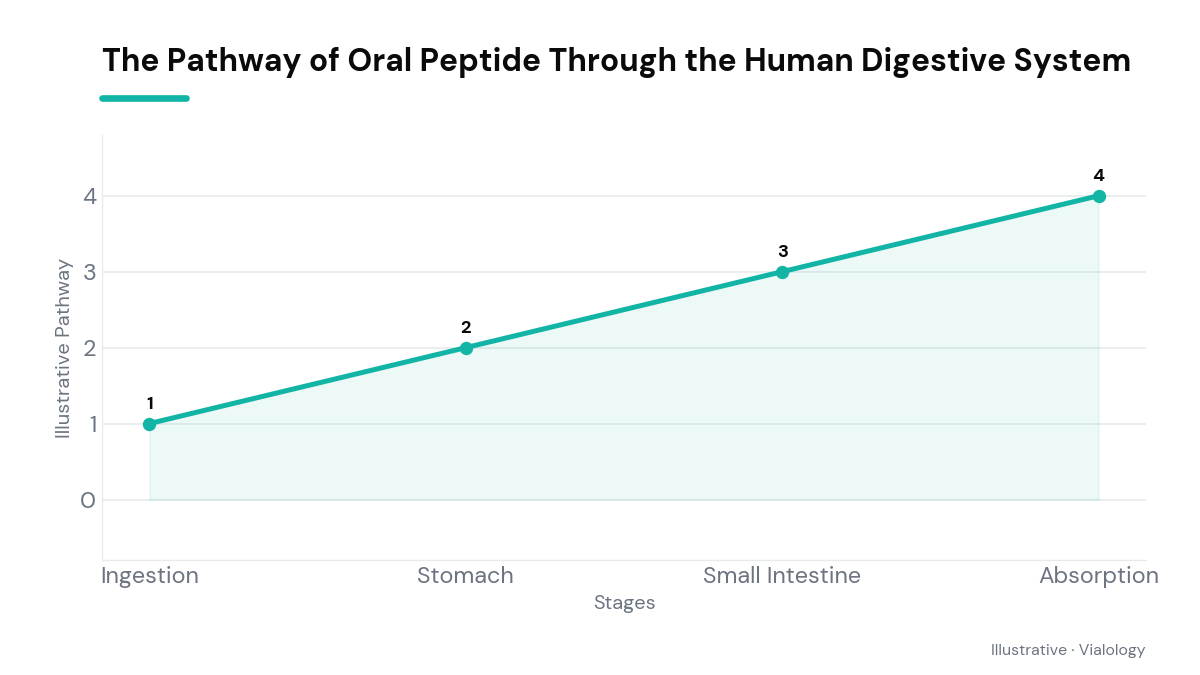
While injections have long been the gold standard for peptide research, the science of oral peptides bioavailability is rapidly evolving to bypass the needle. Taking a peptide in capsule form requires the fragile molecular chain to survive a treacherous journey through the human digestive tract. Understanding what happens to these amino acid structures in the gut environment reveals why oral delivery remains one of biotechnology’s most complex hurdles.
The Acid Test: Surviving Gastric pH
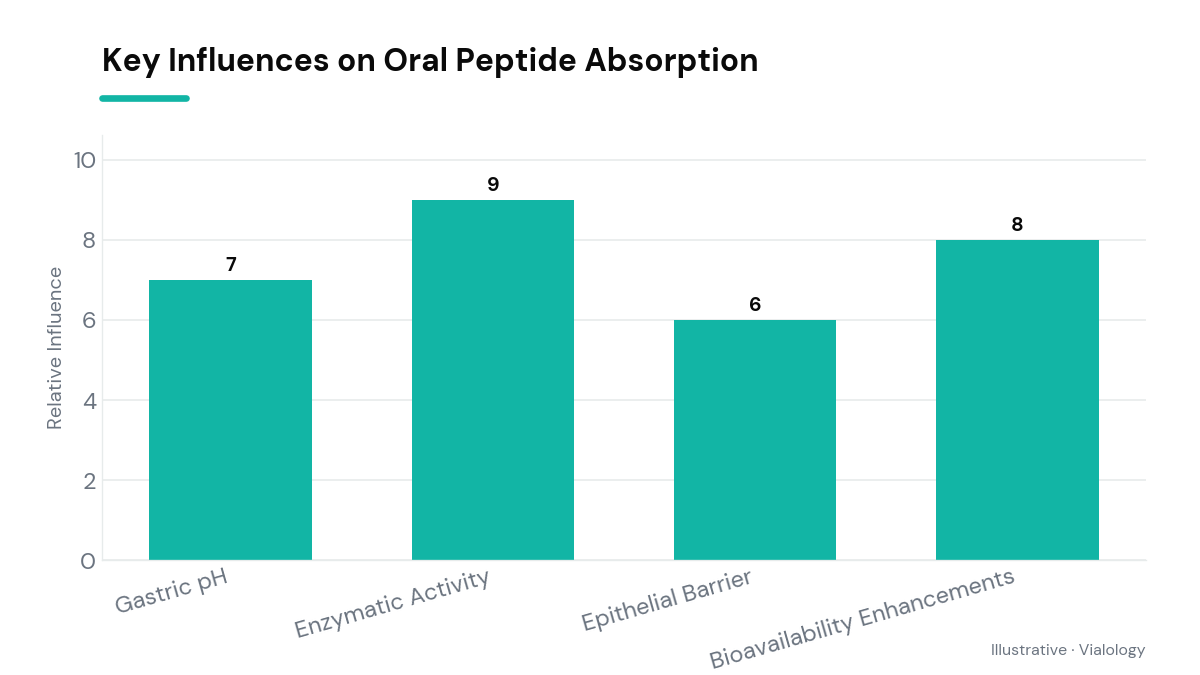
The first and most formidable barrier an oral peptide encounters is the highly acidic environment of the stomach. With a typical pH ranging between 1.5 and 3.5, gastric fluid is designed to denature proteins and facilitate their breakdown. For a therapeutic peptide—which is essentially a short chain of amino acids—this environment behaves like a chemical shredder, unfolding the delicate three-dimensional structures required for the peptide to bind to its target receptors.
In addition to raw acidity, the stomach is packed with pepsin, a powerful proteolytic enzyme that specifically targets and cleaves peptide bonds. Without protective engineering, most unprotected peptides are degraded into inactive amino acid fragments within minutes of entering the gastric chamber, rendering them entirely useless before they ever reach the intestines.
Enzymatic Obstacles in the Small Intestine
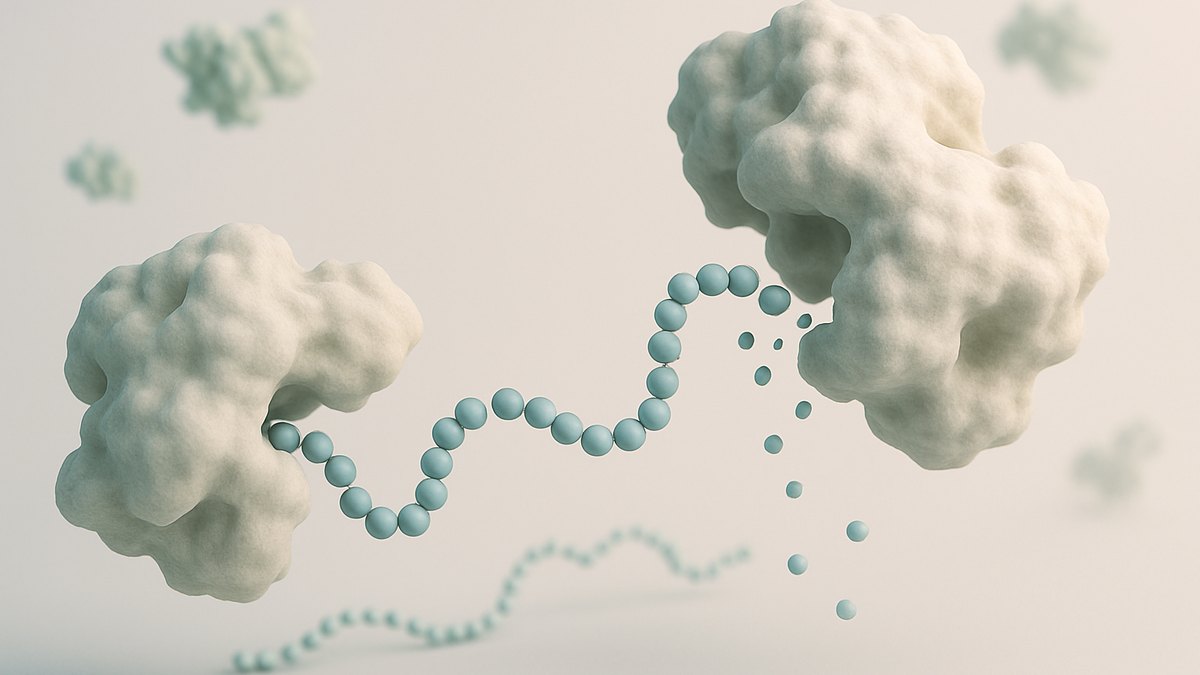
If a peptide survives the stomach or is shielded by an enteric coating, it enters the small intestine, where it faces a second, equally hostile enzymatic gauntlet. Here, the pancreas secretes a cocktail of digestive enzymes, including trypsin, chymotrypsin, and elastase, which are highly efficient at breaking down peptide chains. Even if the molecule escapes these pancreatic enzymes, it must still contend with brush border peptidases embedded in the microvilli of the intestinal wall.
Researchers studying oral peptide absorption have identified that these brush border enzymes are the final enzymatic barrier, degrading peptides as they attempt to pass through the intestinal lining. This relentless enzymatic activity means that only a tiny fraction of a percent of an unmodified peptide typically survives intact to reach the epithelial surface for absorption.
Improving Oral Peptides Bioavailability through Biotech
To overcome these biological barriers and improve oral peptides bioavailability, pharmaceutical scientists employ advanced biochemical strategies. One primary method is the use of chemical permeation enhancers, such as sodium salcaprozate (SNAC), which temporarily fluidize the intestinal cell membranes or open tight junctions to allow peptides to slip through. These enhancers are crucial for modern oral peptide formulations, helping large hydrophilic molecules cross the hydrophobic lipid bilayer of the gut.
Beyond delivery vehicles, researchers also modify the peptide structure itself to enhance stability. By cyclizing linear peptides, incorporating unnatural D-amino acids, or modifying the peptide backbone, scientists can create peptidomimetics that digestive enzymes do not recognize. These structural fortifications, combined with enteric-coated capsules that only dissolve in the higher pH of the small intestine, represent the cutting edge of oral macromolecule delivery.
The Epithelial Barrier and Systemic Circulation
Once a peptide successfully navigates the enzymatic barriers, it must cross the intestinal epithelium to enter the bloodstream. This crossing occurs via two primary pathways: paracellular transport (passing between the cells) or transcellular transport (passing directly through the cells). Because healthy intestinal cells are bound tightly together to prevent pathogens from entering, paracellular transport is highly restricted, limiting absorption to exceptionally small or highly engineered peptide molecules.
Finally, any peptide absorbed through the intestinal wall is immediately routed through the portal vein directly to the liver—a process known as first-pass metabolism. The liver, packed with its own metabolic enzymes, further filters and degrades the peptide before it can reach systemic circulation. Consequently, designing an effective oral peptide is a balancing act of shielding the molecule from the gut while ensuring it can still be absorbed and survive hepatic clearance.
Related on Vialology
Frequently asked questions
Why are most peptides administered via injection rather than orally?
Most peptides are injected because the harsh acid and digestive enzymes of the human gastrointestinal tract rapidly degrade amino acid chains, preventing them from reaching the bloodstream intact.
What is an enteric coating, and how does it help oral peptides?
An enteric coating is a polymer barrier applied to oral capsules that prevents them from dissolving in the acidic stomach, allowing the peptide to be released safely in the neutral environment of the small intestine.
How do permeation enhancers work in oral peptide capsules?
Permeation enhancers temporarily alter the permeability of the intestinal lining, allowing larger peptide molecules to pass through the cellular barrier and enter systemic circulation.
Educational use only. Vialology publishes journalistic and educational content about peptide science. Nothing here is medical advice, diagnosis, or treatment, and nothing should be taken as an endorsement to use any substance. Many peptides discussed are experimental and are not approved by the FDA for human use. Always consult a licensed healthcare professional before making any health decision.