
When exploring the therapeutic potential of copper peptides, researchers frequently evaluate the efficacy of GHK-Cu: Injection vs Topical Delivery for Research Applications. This naturally occurring tripeptide, known for its high affinity for copper, has generated significant scientific interest for its roles in tissue regeneration, collagen synthesis, and cellular repair pathways. Understanding how different administration routes alter its bioavailability and systemic effects is crucial for designing robust experimental models.
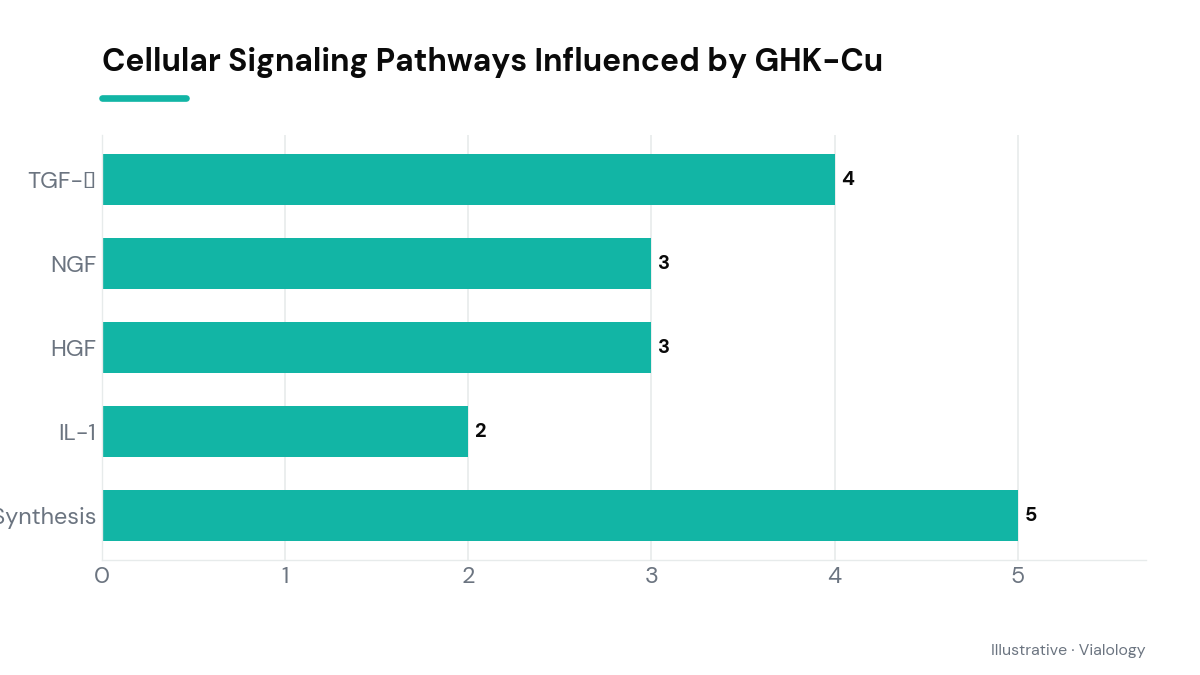
The Biochemistry of GHK-Cu and Cellular Signaling
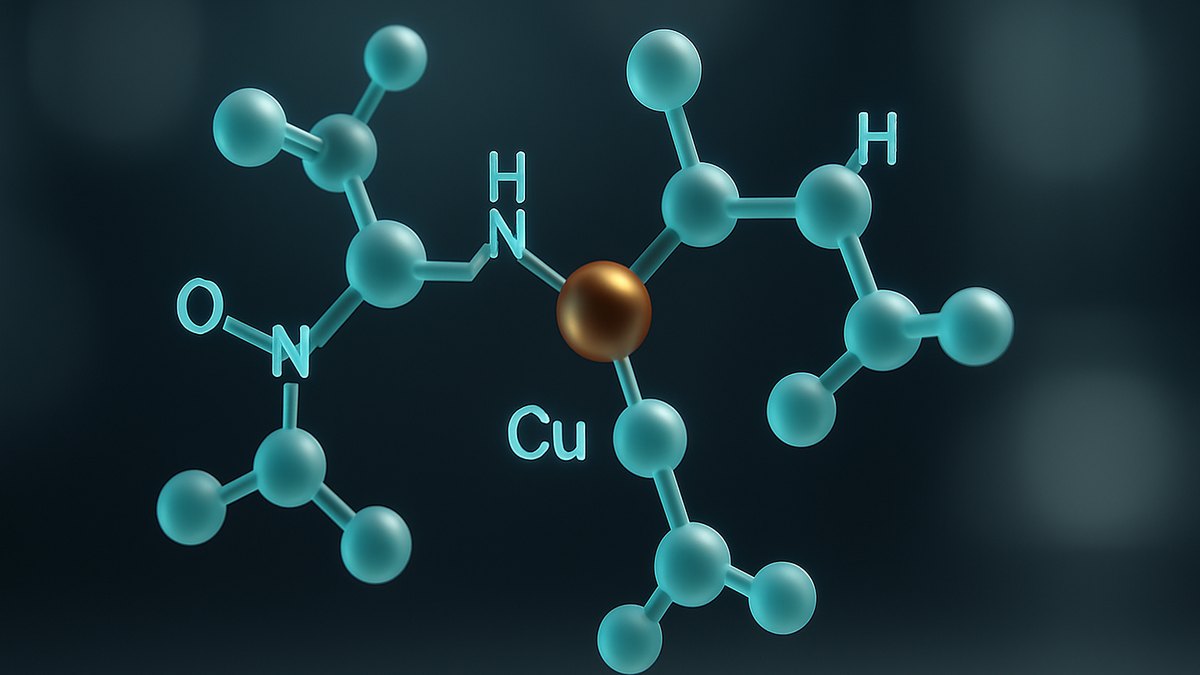
Glycyl-L-histidyl-L-lysine (GHK) is a naturally occurring tripeptide first isolated from human plasma in 1973. Because of its unique molecular structure, GHK readily chelates copper (II) ions to form the GHK-Cu complex, which serves as a potent modulator of extracellular matrix remodeling. In laboratory settings, this complex has been shown to regulate genes responsible for collagen, elastin, and proteoglycan synthesis, making it a focal point of regenerative biology research.
Beyond structural protein upregulation, research suggests that GHK-Cu exhibits notable antioxidant and anti-inflammatory properties. By suppressing pro-inflammatory cytokines such as interleukin-6 (IL-6) and tumor necrosis factor-alpha (TNF-alpha) in cellular cultures, the peptide serves as a valuable model for wound-healing dynamics. However, translating these in vitro findings into in vivo models requires a precise understanding of how the peptide is delivered to target tissues.
GHK-Cu: Injection vs Topical Delivery for Research Applications
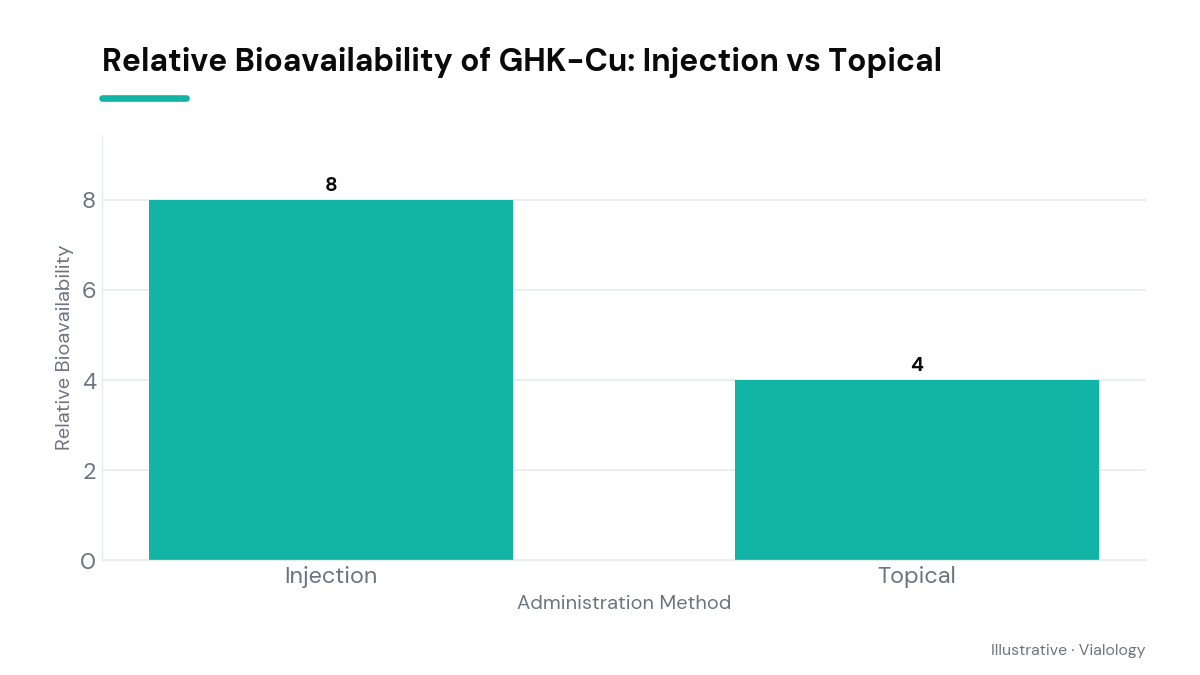
The choice between systemic and localized administration is central to modern peptide science, particularly when comparing injection vs topical delivery of the GHK-Cu complex. Subcutaneous or intramuscular injections bypass the stratum corneum entirely, offering high systemic bioavailability and rapid distribution through the bloodstream. This method is primarily utilized in animal models studying systemic wound healing, lung tissue protection, and age-associated cognitive decline, where a uniform peptide concentration throughout the organism is required.
Conversely, topical delivery limits the peptide’s systemic exposure while maximizing local tissue interaction. Because the intact stratum corneum presents a significant barrier to hydrophilic molecules, researchers evaluating topical GHK-Cu often employ penetration enhancers, microneedling, or liposomal carriers to facilitate epidermal transit. This localized approach is ideal for investigating dermatological repair, follicular stimulation, and localized microvascular blood flow without altering systemic copper levels.
Comparative Bioavailability and Pharmacokinetics
From a pharmacokinetic perspective, the clearance rate of GHK-Cu varies dramatically based on the chosen route. When injected, GHK-Cu is rapidly metabolized by endogenous plasma peptidases, resulting in a short half-life that often necessitates frequent dosing protocols in animal research. A 2015 review highlighted that while systemic administration yields rapid cellular uptake, maintaining sustained levels in specific target organs can be challenging without targeted delivery systems.
Topical application, on the other hand, creates a localized depot effect within the upper layers of the skin. This allows for a sustained, slow release of the peptide to dermal fibroblasts and hair follicles over an extended period. For studies focused on cosmetic dermatology, collagen density, and localized tissue repair, this slow-release profile often proves more advantageous than the sharp peaks and rapid clearance associated with systemic injections.
Choosing the Right Administration Method for Research
Ultimately, the choice of delivery method depends entirely on the specific hypotheses being tested within a research protocol. Investigators focusing on systemic organ protection, total-body tissue regeneration, or neurological biomarkers typically favor injectable models to ensure widespread peptide distribution. These systemic studies continue to explore GHK-Cu’s role in upregulating antioxidant enzymes like superoxide dismutase and neutralizing free radicals at a systemic level.
For researchers investigating localized tissue dynamics, skin biology, or wound-healing assays, topical formulations offer a cleaner experimental model with fewer systemic variables. It is important to note that while GHK-Cu has a long history of cosmetic use, its systemic use via injection remains restricted to laboratory research, as it is not currently approved by the FDA for human administration. Researchers must carefully weigh these regulatory and physiological factors when designing their experimental frameworks.
Related on Vialology
Frequently asked questions
What is the primary difference between systemic and topical GHK-Cu delivery?
Systemic delivery via injection provides rapid, widespread bioavailability throughout the body, whereas topical delivery targets localized tissues like the skin and hair follicles with minimal systemic absorption.
Does GHK-Cu require a carrier system for effective topical absorption?
Yes, because GHK-Cu is a hydrophilic molecule, researchers often utilize liposomes, penetration enhancers, or physical methods like microneedling to help it penetrate the skin’s outer lipid barrier.
Is GHK-Cu approved by the FDA for therapeutic injections in humans?
No, while GHK-Cu is widely used in topical cosmetics, injectable forms of the peptide are not approved by the FDA for human use and are restricted to laboratory and animal research.
Educational use only. Vialology publishes journalistic and educational content about peptide science. Nothing here is medical advice, diagnosis, or treatment, and nothing should be taken as an endorsement to use any substance. Many peptides discussed are experimental and are not approved by the FDA for human use. Always consult a licensed healthcare professional before making any health decision.