
Growth Hormone Secretagogues Explained: GHRH vs GHRP Mechanisms in Research highlights how these synthetic peptides stimulate the pituitary gland to release endogenous growth hormone. While both pathways lead to increased growth hormone levels, they utilize fundamentally different biological mechanisms to achieve this result. Researchers study these compounds to understand their potential applications in muscle preservation, metabolism, and age-related cellular decline.
Understanding GHRH: Mimicking the Brain’s Natural Signal
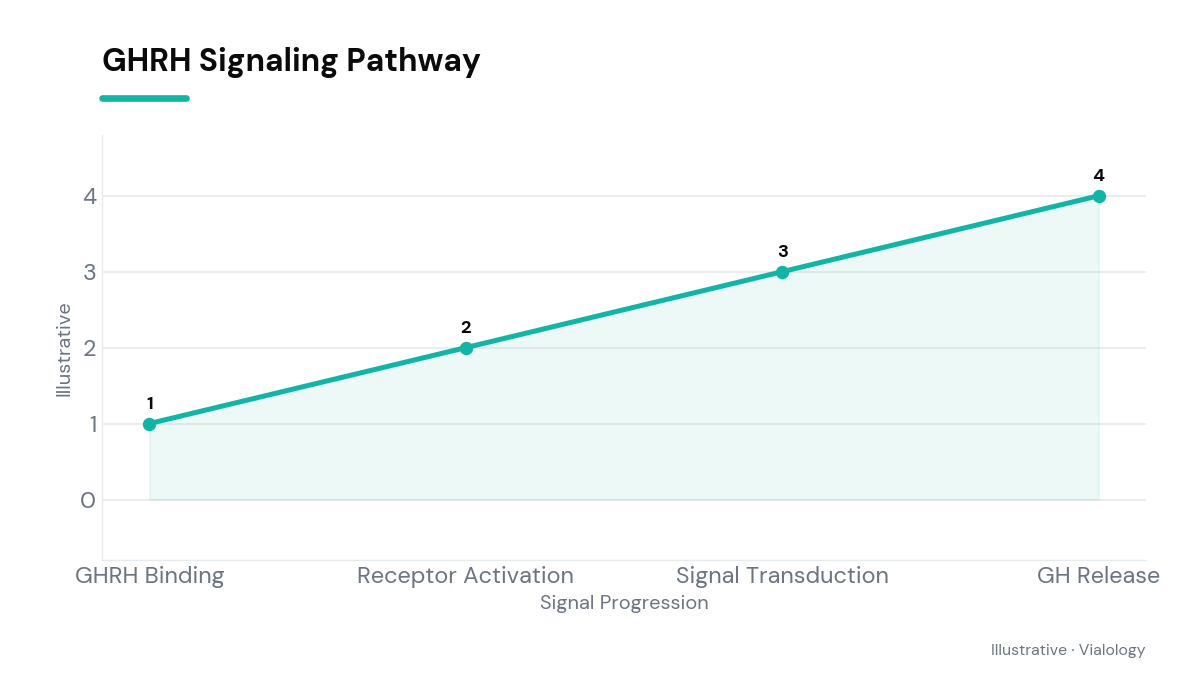
Growth Hormone-Releasing Hormone (GHRH) analogues, such as Sermorelin and CJC-1295, function by mimicking the endogenous hormone produced in the hypothalamus. These peptides bind directly to the GHRH receptors on pituitary cells, known as somatotropes. This binding initiates a intracellular signaling cascade that stimulates both the synthesis and pulsatile release of Growth Hormone (GH). Because they work within the body’s natural regulatory feedback loop, GHRH analogues preserve the typical biological feedback mechanisms, meaning the body can still downregulate GH production if physiological levels become too high.
Research into GHRH analogues often focuses on their ability to restore youthful GH pulsatility. Clinical observations in older adult cohorts have suggested that GHRH therapy can mildly elevate insulin-like growth factor 1 (IGF-1) levels, which correlates with potential improvements in lean body mass and sleep quality. However, because these peptides rely entirely on the pituitary’s existing capacity, their efficacy can be limited if the pituitary gland itself is compromised or exhausted due to advanced age or specific pathological conditions.
Exploring GHRP: Activating the Ghrelin Receptor
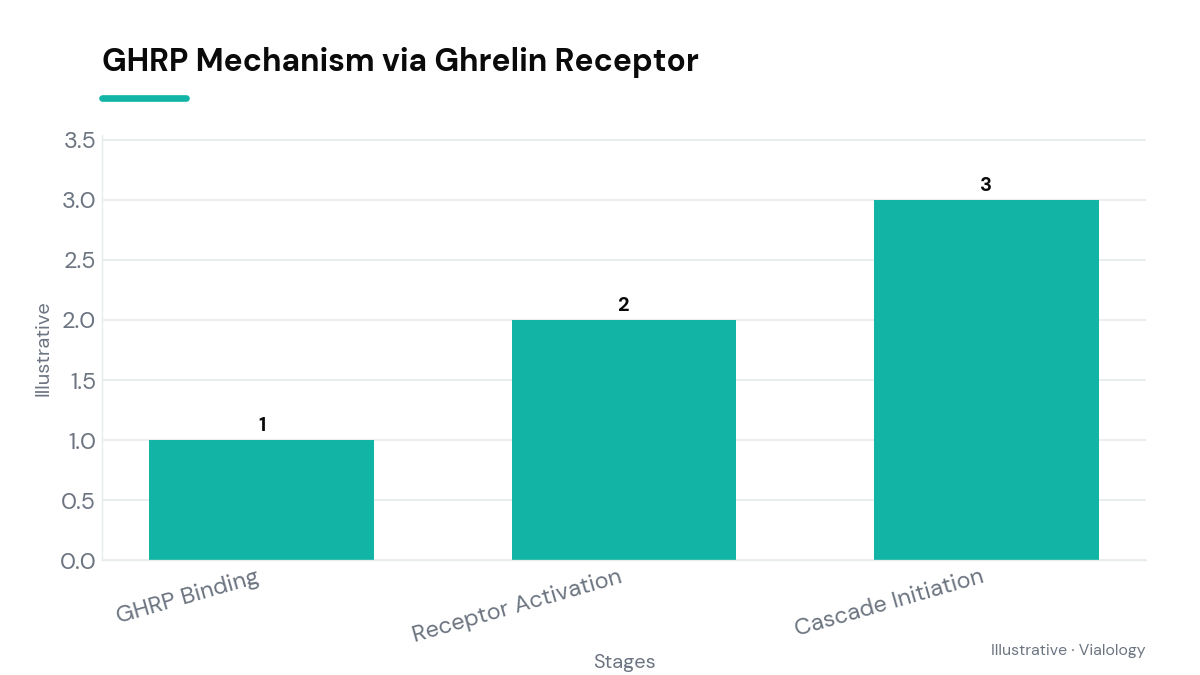
In contrast, Growth Hormone Releasing Peptides (GHRPs), such as Ipamorelin, GHRP-2, and GHRP-6, operate via a completely different biological pathway. Instead of targeting GHRH receptors, GHRPs mimic ghrelin—the hormone primarily responsible for hunger signaling—by binding to the growth hormone secretagogue receptor (GHSR-1a). This pathway bypasses the typical hypothalamic feedback loops and acts directly on the pituitary, prompting a rapid and significant release of growth hormone. Because they mimic ghrelin, some older-generation GHRPs can also stimulate appetite, increase cortisol, and elevate prolactin levels, though newer selective options like Ipamorelin minimize these off-target effects.
To fully grasp the practical differences between these two peptide families, understanding the core GHRH vs GHRP mechanisms is essential for evaluating their distinct physiological impacts. While GHRPs trigger a more robust and immediate spike in GH compared to GHRH analogues, they also carry a higher risk of desensitizing receptors if administered continuously. Consequently, researchers frequently explore intermittent pulsatile models in animal subjects to prevent receptor downregulation while maximizing the therapeutic window.

Synergistic Co-Administration in Scientific Research
One of the most intriguing areas of endocrine research is the synergy between GHRH and GHRP compounds. When administered individually, both classes show moderate efficacy in elevating GH levels. However, laboratory studies demonstrate that when a GHRH analogue and a GHRP are introduced simultaneously, they produce a synergistic effect that is far greater than the sum of their individual parts. This occurs because the GHRH analogue stimulates the production and release of GH, while the GHRP simultaneously inhibits somatostatin—the primary hormone responsible for halting GH release.
This dual-action mechanism prevents the premature termination of the GH pulse, allowing for a highly amplified endocrine response. Although this synergy is highly documented in animal models and clinical trial environments, researchers warn that such potent combinations also increase the likelihood of systemic side effects. Most of these compounds remain unapproved by the FDA for general anti-aging or athletic enhancement, maintaining their status primarily as research chemicals.
Growth Hormone Secretagogues Explained: GHRH vs GHRP Mechanisms in Research Applications
The primary goal of researching these secretagogues is to find alternatives to direct recombinant Human Growth Hormone (rHGH) therapy. Direct rHGH administration is associated with significant clinical risks, including joint pain, insulin resistance, and the permanent shutdown of endogenous GH production. By contrast, GHRH and GHRP compounds stimulate the body’s own endocrine machinery, preserving natural pulsatile release patterns and minimizing the risk of permanent pituitary suppression.
Current investigations span several areas, including wound healing, cognitive health, and the mitigation of sarcopenia in elderly populations. Despite promising preliminary data from various in vitro and animal studies, long-term human safety profiles remain incomplete. As the field of peptide science evolves, rigorous clinical trials will be necessary to define the precise therapeutic thresholds and safety margins of these powerful signaling molecules.
Related on Vialology
Frequently asked questions
What is the main difference between GHRH and GHRP?
GHRH mimics the brain’s natural signaling hormone to gently stimulate GH release, while GHRP mimics ghrelin to trigger a rapid, more potent release of GH by bypassing hypothalamic feedback loops.
Can you use GHRH and GHRP together in research?
Yes, studies show they act synergistically because GHRH stimulates GH production while GHRP suppresses somatostatin, the hormone that inhibits GH release.
Are these growth hormone secretagogues FDA-approved?
While a few specific compounds like Sermorelin have historical approvals for specific medical diagnoses, most GHRH and GHRP peptides are classified as investigational and are not approved for general anti-aging or performance enhancement.
Educational use only. Vialology publishes journalistic and educational content about peptide science. Nothing here is medical advice, diagnosis, or treatment, and nothing should be taken as an endorsement to use any substance. Many peptides discussed are experimental and are not approved by the FDA for human use. Always consult a licensed healthcare professional before making any health decision.