
As interest in metabolic health reaches an all-time high, many consumers are searching for a non-prescription glp-1 supplement that can offer similar benefits to blockbuster weight-loss medications. Unlike pharmaceutical agonists that directly mimic the hormone glucagon-like peptide-1, over-the-counter alternatives aim to stimulate the body’s natural production of this vital peptide. This article examines the biological mechanisms behind these natural compounds and evaluates what the current scientific literature says about their efficacy.
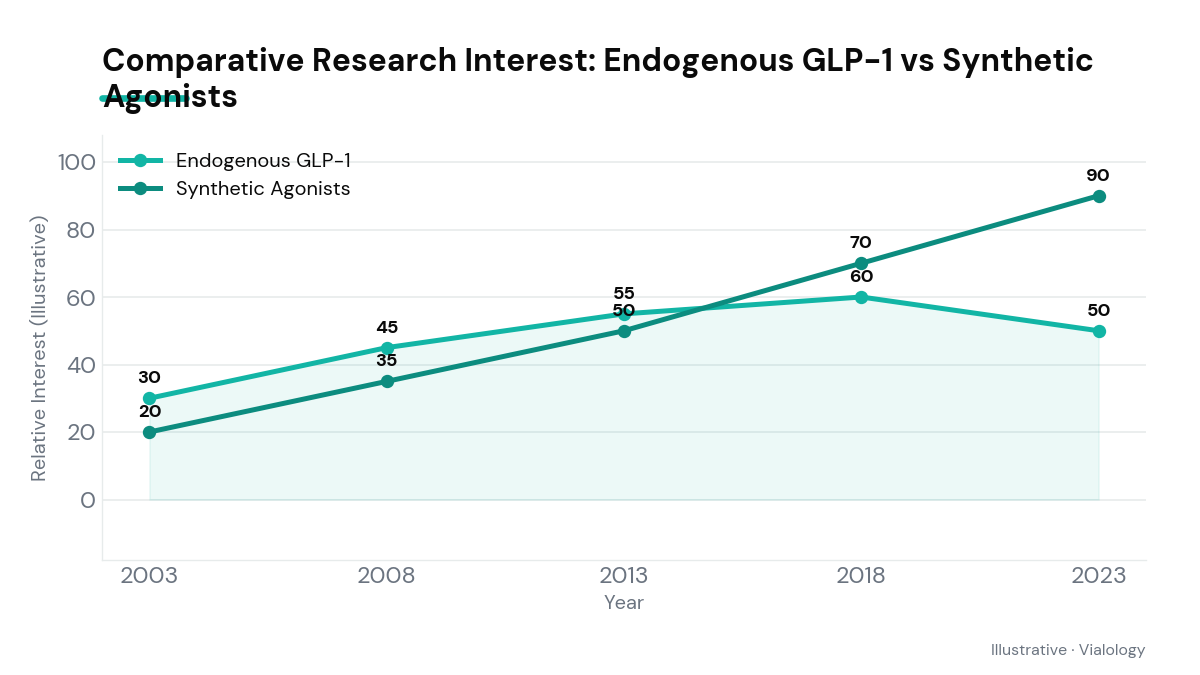
The Biology of Endogenous GLP-1 vs. Synthetic Agonists
Natural glucagon-like peptide-1 (GLP-1) is an incretin hormone secreted by the L-cells of the distal gut in response to nutrient ingestion. Once released, it stimulates insulin secretion, delays gastric emptying, and signals satiety to the brain. However, endogenous GLP-1 is rapidly degraded within minutes by an enzyme called dipeptidyl peptidase-4 (DPP-4). Pharmaceutical GLP-1 receptor agonists, such as semaglutide, are molecularly engineered to resist this enzymatic breakdown, allowing them to circulate at active concentrations for significantly longer periods.
Conversely, over-the-counter options do not introduce synthetic, long-lasting peptides into the bloodstream. Instead, they attempt to trigger the gut’s L-cells to release more of the body’s native, short-lived GLP-1. While this approach aligns with natural physiological pathways, researchers note that endogenous GLP-1 release is self-limiting and quickly neutralized, presenting a distinct pharmacodynamic profile compared to clinical injections.
Evaluating Key Ingredients in a glp-1 supplement
Several dietary bioactives are frequently marketed as natural GLP-1 triggers, with berberine, soluble fibers, and specific polyphenols leading the list. Berberine, an alkaloid extracted from plants like goldenseal, has been shown in animal models and small-scale human trials to activate AMP-activated protein kinase (AMPK) and indirectly promote GLP-1 secretion. A 2021 review highlighted its potential to modulate the gut microbiota, which in turn influences the metabolic environment, though the direct incretin-boosting effect in humans remains modest compared to synthetic agonists.
Fermentable soluble fibers, such as beta-glucan and psyllium, offer another evidence-based pathway. When these fibers reach the colon, gut bacteria ferment them into short-chain fatty acids (SCFAs) like acetate, propionate, and butyrate. These SCFAs bind to free fatty acid receptors on L-cells, stimulating the release of native GLP-1 and peptide YY. Clinical studies consistently demonstrate that while fiber consumption improves metabolic markers and satiety, the magnitude of hormone elevation is physiological rather than pharmacological.

What the Clinical Evidence Reveals About OTC Metabolic Support
Clinical research into over-the-counter metabolic compounds reveals a clear divergence between cellular assays and real-world human outcomes. Many studies demonstrating dramatic GLP-1 upregulation are conducted in vitro or in rodent models, where direct exposure to high concentrations of active compounds is possible. In human trials, oral bioavailability, gastrointestinal degradation, and individual microbiome variations significantly dampen these effects, making high-potency replication of pharmaceutical-grade weight loss highly unlikely through diet alone.
Furthermore, long-term human data on OTC metabolic supports are often limited by small cohort sizes and varying methodologies. While these supplements may play a supportive role in overall metabolic wellness, glucose regulation, and mild appetite suppression when paired with dietary changes, scientific consensus emphasizes that they function as gentle modulators rather than direct receptor activators.
Related on Vialology
Frequently asked questions
Can a dietary supplement truly replicate pharmaceutical GLP-1 receptor agonists?
No, dietary supplements cannot replicate the high-potency, long-lasting receptor activation of pharmaceutical agonists, as natural compounds only stimulate the release of native GLP-1, which is rapidly degraded by the body within minutes.
What natural compounds are currently being researched for endogenous GLP-1 release?
Researchers are actively studying soluble fibers (like beta-glucan), plant alkaloids (such as berberine), green tea catechins, and specific short-chain fatty acids for their ability to stimulate L-cells in the gut.
How does the gut microbiome influence metabolic hormone pathways in clinical studies?
Clinical studies show that gut microbiota ferment prebiotic fibers into short-chain fatty acids, which then bind to specific receptors on intestinal L-cells to trigger the release of endogenous metabolic hormones.
What do clinical trials say about the effectiveness of over-the-counter metabolic support?
Clinical trials indicate that while some over-the-counter compounds can modestly improve insulin sensitivity and support satiety, their overall impact on weight loss is significantly milder than that of prescribed receptor agonists.
Educational use only. Vialology publishes journalistic and educational content about peptide science. Nothing here is medical advice, diagnosis, or treatment, and nothing should be taken as an endorsement to use any substance. Many peptides discussed are experimental and are not approved by the FDA for human use. Always consult a licensed healthcare professional before making any health decision.