
Welcome to Recovery and Healing Research Peptides: A Category Guide for New Researchers, an educational overview designed to demystify the complex biochemistry of tissue repair. In the rapidly evolving landscape of molecular biology, researchers are increasingly looking at how short-chain amino acids signal cellular recovery. This guide explores the scientific foundations, documented mechanisms, and current state of literature surrounding these investigational compounds.
Understanding the Mechanism of Cellular Repair
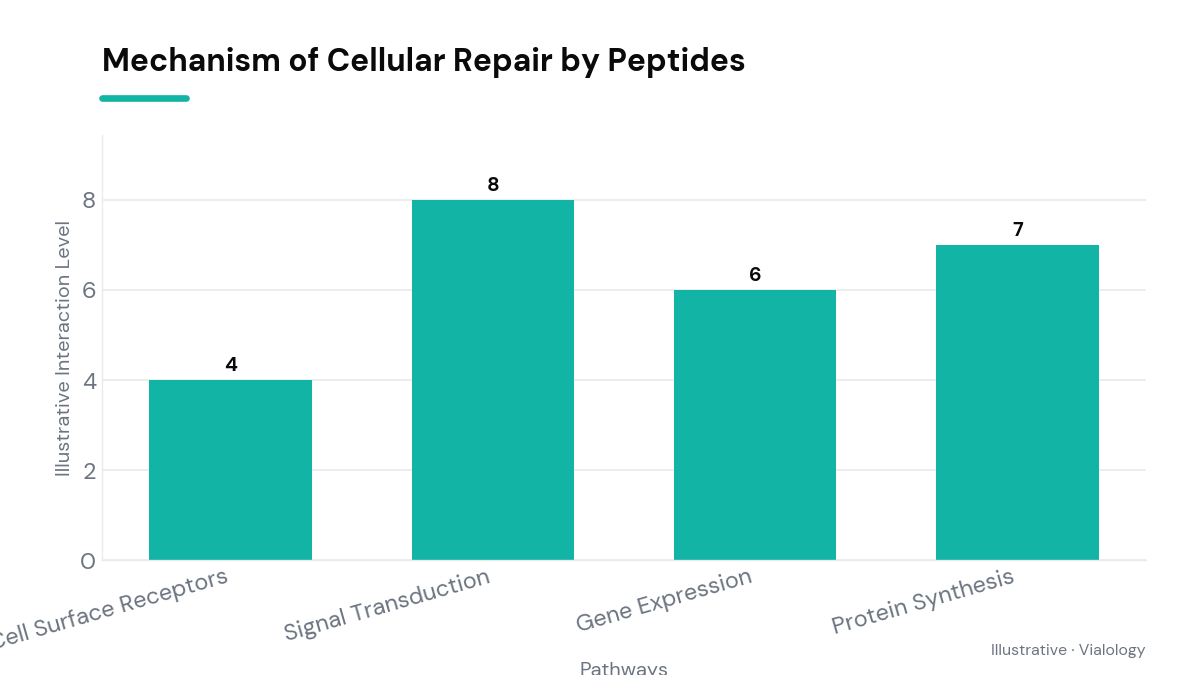
At the cellular level, tissue recovery is a highly coordinated cascade of inflammation, proliferation, and remodeling. Research peptides in the healing category are studied primarily for their ability to act as precise signaling molecules that interface with this cascade. Unlike traditional pharmacotherapies that may broadly suppress or stimulate systemic functions, these short-term chains of amino acids target specific cell surface receptors to upregulate endogenous healing processes. In vitro studies demonstrate that certain peptides can stimulate the migration of fibroblasts, the cells responsible for synthesizing collagen and the extracellular matrix.
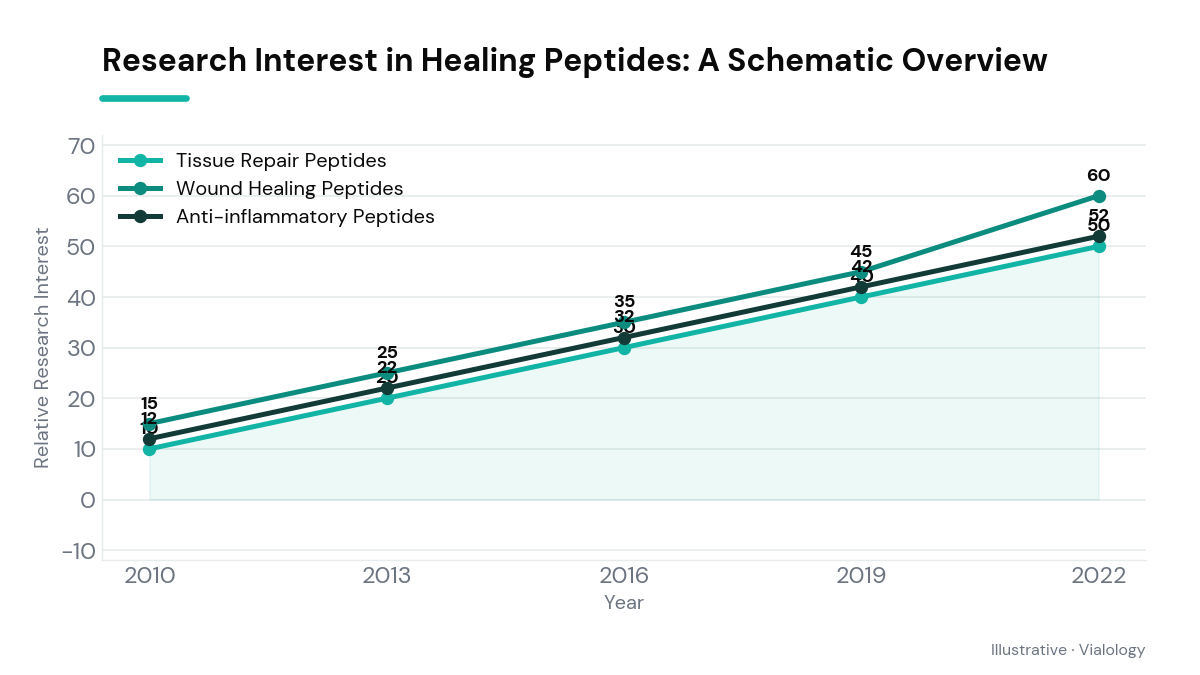
Angiogenesis, or the formation of new blood vessels from pre-existing ones, is another critical focal point of recovery research. Without adequate blood flow, damaged tissues cannot receive the oxygen and nutrients required for regeneration. A 2019 review published in the Journal of Applied Physiology highlighted how specific signaling peptides promote the expression of Vascular Endothelial Growth Factor (VEGF), thereby accelerating microvascular capillary sprouting in damaged muscle tissues of animal models.
Key Compounds Under Scientific Investigation
Among the most frequently documented compounds in this class is BPC-157, a pentadecapeptide derived from a protective protein found in human gastric juice. In rodent models of injury, researchers have observed that BPC-157 promotes tendon-to-bone healing and accelerates the repair of transected skeletal muscles. A 2021 study suggested that this compound exerts its effects by modulating growth hormone receptors and upregulating the FAK-paxillin pathway, which is essential for cell adhesion and migration.
Another heavily researched molecule is Thymosin Beta-4, often referred to in literature as TB-500. This actin-sequestering peptide plays a vital role in cell proliferation and tissue protection. When establishing a new laboratory protocol, utilizing a beginner’s category guide can streamline the process of identifying which molecular pathways, such as the actin-cytoskeleton remodeling pathway, to target first. Investigators continue to analyze how these specific peptides work in tandem to influence systemic healing markers.
Navigating Recovery and Healing Research Peptides: A Category Guide for New Researchers
For emerging scientists, distinguishing between preclinical findings and established clinical reality is a paramount skill. While animal models demonstrate remarkable efficiency—such as accelerated dermal wound closure in diabetic mice—human clinical trials remain limited and highly regulated. Many of these peptides are not approved by the FDA for human therapeutic use and are classified strictly as research chemicals. This designation means their long-term safety profiles, systemic toxicities, and potential drug interactions are still being mapped out in academic settings.
Scientific integrity requires acknowledging that what succeeds in a petri dish or a rodent model does not always translate directly to human biology. The half-life of these compounds, their susceptibility to enzymatic degradation, and their bioavailability represent significant hurdles that researchers must account for in experimental designs. Consequently, the focus remains on optimizing delivery systems and understanding the exact molecular dynamics before any widespread clinical applications can be realized.
Methodological Considerations and Future Horizons
Conducting rigorous research with recovery-focused peptides requires precise environmental controls and analytical methods. Researchers must pay close attention to peptide reconstitution, storage temperatures, and purity levels, as these factors directly influence experimental reproducibility. Degradation is a common challenge; short-chain peptides are inherently unstable and can lose potency rapidly if exposed to ambient heat or improper pH levels during laboratory handling.
Looking forward, the integration of computational biology and machine learning is allowing researchers to predict peptide-receptor interactions with unprecedented accuracy. By modeling how synthetic analogs bind to target receptors, scientists hope to design more stable, bioavailable molecules that can selectively modulate recovery pathways. This intersection of biochemistry and technology promises to keep this category at the forefront of regenerative science for years to come.
Related on Vialology
Frequently asked questions
What is the primary role of recovery peptides in scientific research?
In laboratory settings, these peptides are studied for their ability to bind to specific cell receptors, thereby signaling the upregulation of collagen synthesis, cell migration, and blood vessel formation.
Are recovery and healing peptides approved for human use by the FDA?
No, the majority of these compounds, including BPC-157 and Thymosin Beta-4, are not approved by the FDA for human clinical use and are restricted to laboratory research and in vitro or in vivo testing.
Why is the distinction between animal research and human applications so critical in this field?
Animal models provide valuable initial data on molecular pathways, but human physiology presents unique metabolic and safety challenges that require extensive, multi-phase clinical trials to fully understand.
Educational use only. Vialology publishes journalistic and educational content about peptide science. Nothing here is medical advice, diagnosis, or treatment, and nothing should be taken as an endorsement to use any substance. Many peptides discussed are experimental and are not approved by the FDA for human use. Always consult a licensed healthcare professional before making any health decision.