
In recent years, peptide therapy has emerged as one of the most intriguing frontiers in molecular biology and investigative medicine. These short chains of amino acids act as targeted biological messengers, mimicking endogenous signaling molecules to influence complex physiological processes. From early isolation of naturally occurring hormones to modern synthetic analog design, scientific interest continues to grow around how these precise sequences interact with cellular machinery.
The Cellular Mechanics of Peptide Signaling
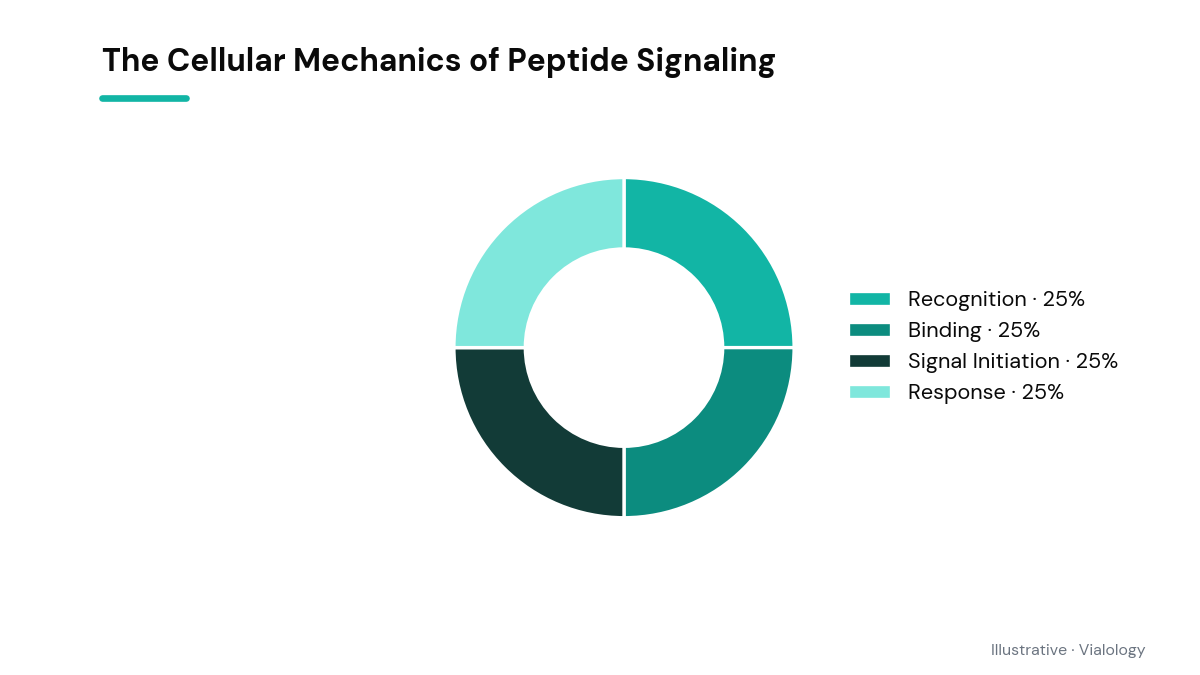
At its core, peptide science revolves around cellular communication. Peptides are short polymers of amino acids—typically containing between two and fifty residues—that bind to specific cell-surface receptors, such as G-protein coupled receptors (GPCRs). Unlike larger macromolecular proteins, these smaller signaling molecules act like precise biological keys fitting into cellular locks. When a peptide binds to its target receptor, it triggers an intracellular cascade, modulating processes such as gene expression, enzyme activity, and metabolic pathways. In biological systems, naturally occurring peptides regulate metabolic homeostasis, tissue repair, immune responses, and neurotransmission.
Because of their high receptor selectivity, scientists have long viewed peptide molecules as ideal candidates for targeted physiological research. Naturally occurring peptides, however, often suffer from rapid enzymatic degradation in human plasma, resulting in a brief biological half-life. To overcome this limitation, modern chemical synthesis focuses on structural modifications—such as amino acid substitutions, cyclization, or lipidation—to enhance stability while preserving receptor affinity. A 2018 review in Frontiers in Chemistry noted that these structural adaptations have dramatically expanded the research potential of synthetic analogs, allowing scientists to study sustained cellular signaling in preclinical models.
From Insulin to Synthetic Analogues: A Historical Timeline
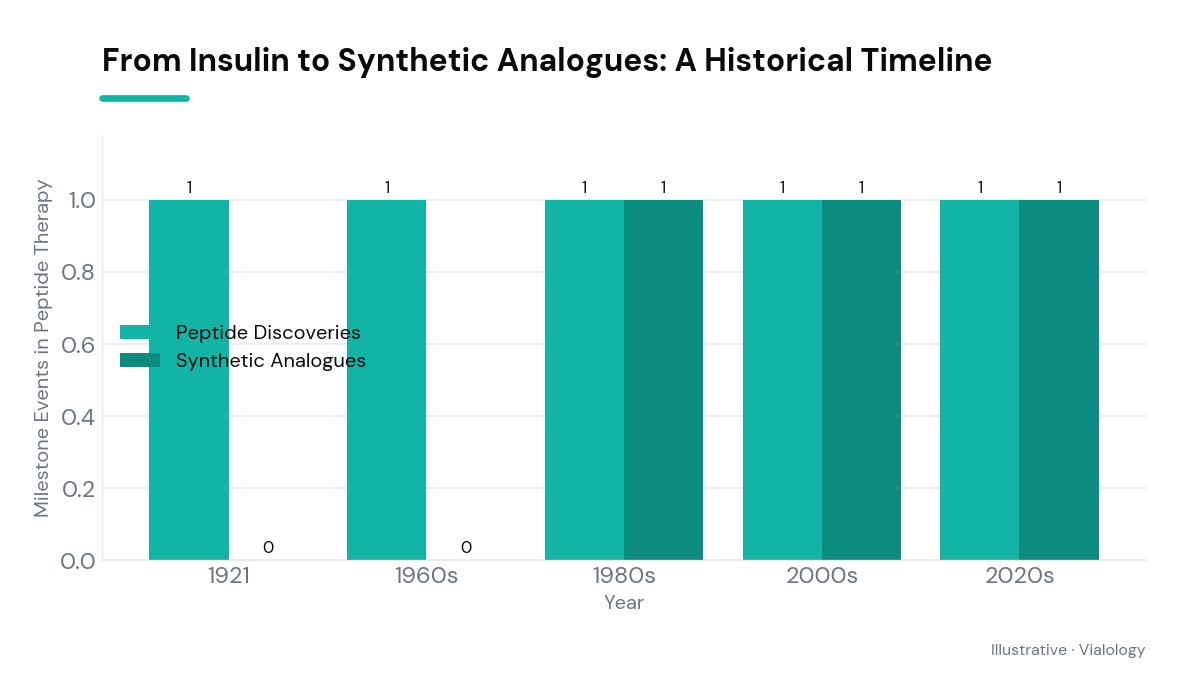
The scientific journey of peptide-based research began over a century ago with the discovery and isolation of insulin in 1921. This medical breakthrough demonstrated that administering a specific amino acid sequence could directly influence human metabolic pathways and correct life-threatening physiological imbalances. Decades later, the invention of solid-phase peptide synthesis (SPPS) by Robert Bruce Merrifield in 1963 revolutionized the field, earning him a Nobel Prize in Chemistry. SPPS enabled scientists to efficiently synthesize custom amino acid sequences in laboratory settings without relying on extracting biological material from animal tissues.
Throughout the late 20th and early 21st centuries, advances in recombinant DNA technology and automated molecular synthesis further accelerated the discovery of novel signaling molecules. Researchers shifted focus from simply replacing deficient natural hormones to engineering novel synthetic analogs with optimized pharmacological profiles. Today, thousands of synthetic peptide sequences are actively studied across global research facilities, shedding light on intricate mechanisms ranging from growth hormone secretagogues to selective receptor agonists.

The Expanding Frontier of Peptide Therapy Research
Contemporary investigation into peptide therapy spans multiple fields of medicine, including endocrinology, oncology, and regenerative biology. One major area of focus involves metabolic control and neuroendocrine regulation, where peptides acting on glucagon-like peptide-1 (GLP-1) receptors have demonstrated significant effects on glucose regulation and satiety signaling. Additionally, preclinical research in animal models has investigated tissue repair peptides like BPC-157 and TB-500, examining their potential roles in cellular migration, collagen deposition, and blood vessel formation following tissue stress.
Another burgeoning arena of scientific inquiry is the relationship between peptide signaling and biological aging. Longevity researchers are actively exploring how specific peptide sequences might modulate mitochondrial function, reduce inflammatory cascades, or stimulate endogenous repair mechanisms. While many promising compounds remain in preclinical stages or preliminary clinical trials, the expanding body of peer-reviewed literature underscores the vast potential of peptide interactions across diverse biological systems.
Navigating Regulatory Status and Future Directions
The translation of research peptides from academic laboratories to regulated clinical applications requires extensive safety and efficacy evaluation. Globally, regulatory authorities such as the U.S. Food and Drug Administration (FDA) classify peptides under distinct regulatory frameworks depending on their origin, synthesis, and intended use. While established peptide medications like insulin or certain GLP-1 receptor agonists have achieved full approval for human therapeutic use, many novel synthetic sequences are categorized strictly as investigational compounds restricted to laboratory settings.
As analytical tools such as high-resolution mass spectrometry and computational structural biology continue to evolve, scientists can predict peptide-receptor dynamics with remarkable accuracy. This technological shift allows for the rational design of highly selective peptides engineered for specific physiological interactions. Moving forward, the field continues to balance accelerated academic discovery with rigorous scientific validation, aiming to harness cellular signaling for future medical applications.
Related on Vialology
Frequently asked questions
What is peptide therapy from a scientific standpoint?
From a scientific perspective, peptide therapy refers to the experimental or clinical administration of specific amino acid sequences designed to selectively target cell receptors and modulate natural biological signaling pathways.
How do researchers study peptide signaling in the body?
Researchers evaluate peptide signaling using in vitro cell cultures, high-resolution structural imaging, and in vivo animal models to observe receptor binding affinity, metabolic stability, and downstream cellular responses.
What are the main regulatory statuses of research peptides?
Research peptides vary in regulatory status, ranging from FDA-approved pharmaceutical drugs with established clinical indications to unapproved investigational compounds restricted strictly to laboratory research.
Why is peptide therapy studied in modern longevity research?
Peptide therapy is studied in longevity science because short-chain peptides can precisely influence pathways related to cellular repair, mitochondrial health, tissue regeneration, and age-related biological decline.
Educational use only. Vialology publishes journalistic and educational content about peptide science. Nothing here is medical advice, diagnosis, or treatment, and nothing should be taken as an endorsement to use any substance. Many peptides discussed are experimental and are not approved by the FDA for human use. Always consult a licensed healthcare professional before making any health decision.