
As researchers and longevity enthusiasts seek new ways to optimize body composition and physical longevity, peptides for muscle growth have become a primary focal point of modern biochemical investigation. These short chains of amino acids serve as precise cellular messengers, influencing pathways related to tissue repair, protein synthesis, and hormone regulation. Understanding how these compounds operate at a molecular level requires diving into decades of endocrinology and emerging clinical trials.
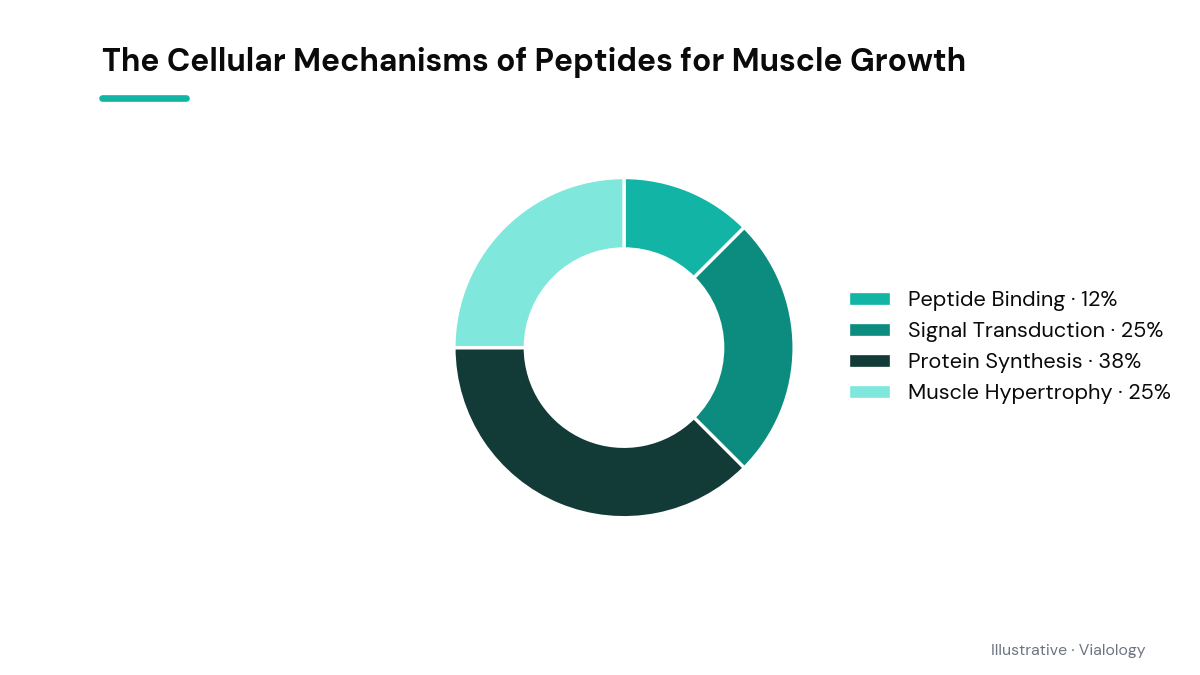
The Cellular Mechanisms of Peptides for Muscle Growth
At the core of skeletal muscle hypertrophy and tissue repair lies a complex cascade of endocrine signaling. Peptides studied in this domain typically target specific cell surface receptors to stimulate downstream anabolic pathways. Unlike traditional anabolic steroids, which directly bind to androgen receptors and can cause systemic hormonal imbalances, therapeutic peptides generally act as secretagogues or selective agonists. For instance, growth hormone secretagogues (GHSs) mimic endogenous hormones like ghrelin to trigger the pulsatile release of natural growth hormone (GH) from the anterior pituitary gland, which subsequently initiates the production of insulin-like growth factor 1 (IGF-1) in the liver.
IGF-1 is a key driver of muscle hypertrophy, acting to promote the proliferation and differentiation of satellite cells—the precursor cells responsible for muscle fiber regeneration. In addition to the GH-IGF-1 axis, researchers are looking at pathways that regulate muscle degradation. By targeting these regulatory feedback loops, scientists hope to discover therapeutic avenues that can counteract muscle-wasting conditions, or sarcopenia, associated with aging and chronic illness without the harsh side-effect profiles of older therapeutic classes.
Growth Hormone Secretagogues: Stimulating the GH-IGF-1 Axis
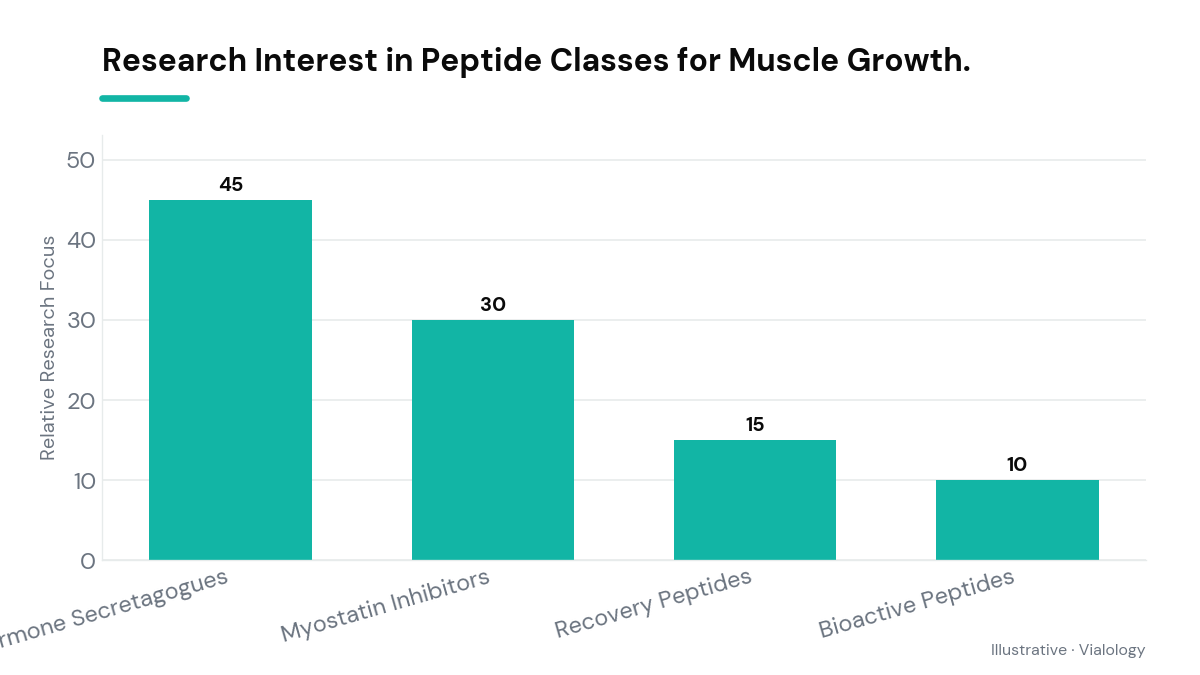
Among the most heavily researched compounds in this category are growth hormone-releasing hormone (GHRH) mimetics and growth hormone secretagogues. Early generations, such as Sermorelin (approved by the FDA in 1997 for growth hormone deficiency but later discontinued commercially), paved the way for more selective analogues. Later developments introduced compounds like Ipamorelin and CJC-1295. In preclinical models and early clinical evaluations, Ipamorelin demonstrated a high degree of selectivity, stimulating growth hormone release without significantly elevating cortisol or prolactin levels—a common limitation of earlier peptide generations.
A landmark study published in the early 2000s highlighted how these secretagogues maintain the body’s natural pulsatile rhythm of growth hormone release, rather than creating a constant, supraphysiologic elevation. This physiological pulsatility is hypothesized by researchers to reduce the risk of receptor desensitization and side effects like insulin resistance, which are frequently associated with direct recombinant human growth hormone (rhGH) administration. However, while these compounds are widely used in laboratory research, many remain unapproved by the FDA for general performance enhancement or anti-aging purposes.
Myostatin Inhibitors and Recovery Peptides: The Frontiers of Tissue Growth
Beyond encouraging growth hormone production, another class of research peptides targets the biological brakes of muscle development: myostatin. Myostatin is a naturally occurring hormone that restricts muscle hypertrophy to prevent excessive growth. In animal models, experimental myostatin inhibitors like Follistatin-344 have shown the potential to neutralize this hormone, leading to significant increases in muscle mass. However, translating these dramatic animal-model results to human therapies remains challenging due to off-target effects and delivery difficulties.
Concurrently, healing-focused peptides such as BPC-157 (Body Protection Compound 157) are being studied for their role in tissue repair. In preclinical rodent trials, BPC-157 has been observed to accelerate the healing of poorly vascularized tissues, such as tendons and ligaments, by promoting angiogenesis (new blood vessel formation) and collagen synthesis. While promising, both myostatin inhibitors and recovery peptides lack extensive human clinical trial data, and regulatory bodies like the FDA and WADA heavily restrict or prohibit their use.
Related on Vialology
Frequently asked questions
What are the primary categories of peptides studied for muscle development?
Researchers primarily study growth hormone secretagogues (GHSs), which stimulate the body’s natural growth hormone release, and myostatin inhibitors, which target the genetic pathways that limit muscle growth. Additionally, recovery-focused peptides like BPC-157 are investigated for their ability to accelerate tendon and ligament repair.
How do growth hormone secretagogues differ from direct hormone therapies in research?
Unlike direct hormone therapies that introduce exogenous growth hormone into the body, secretagogues stimulate the pituitary gland to release its own endogenous hormone in a natural, pulsatile manner. This mechanism is theorized to preserve normal endocrine feedback loops and reduce the risk of severe side effects like insulin resistance.
Are peptides for muscle growth approved by the FDA for athletic enhancement?
No, the FDA has not approved any peptides for the purpose of athletic enhancement or muscle building in healthy individuals. Furthermore, the World Anti-Doping Agency (WADA) and other sports governing bodies strictly prohibit the use of these compounds in competitive athletics.
What does current clinical research say about the safety of these compounds?
While some peptides have demonstrated favorable safety profiles in controlled, low-dose clinical settings for specific medical conditions, comprehensive long-term human safety data is still highly limited. Many compounds showing promise in animal models have not yet undergone rigorous human testing, leaving questions about their potential side effects unresolved.
Educational use only. Vialology publishes journalistic and educational content about peptide science. Nothing here is medical advice, diagnosis, or treatment, and nothing should be taken as an endorsement to use any substance. Many peptides discussed are experimental and are not approved by the FDA for human use. Always consult a licensed healthcare professional before making any health decision.