
Evaluating the optimal glow blend dosage requires a close look at how synergistic peptide formulations perform in clinical and laboratory research settings. As interest in oral peptide delivery grows, researchers are studying how combined ingredients behave when packaged together in oral capsules rather than traditional subcutaneous injections. This article explores the current scientific literature surrounding these oral blends, focusing on how format impacts bioavailability and systemic absorption.
Understanding the Oral Peptide Format
Historically, therapeutic peptides have been administered via subcutaneous injection to bypass the harsh digestive enzymes of the gastrointestinal tract. However, advances in molecular science and encapsulation technology have made oral delivery options increasingly viable for researchers studying cellular health. Oral formats rely on specific protective coatings and permeation enhancers to shield active peptides from premature degradation, allowing a portion of the compounds to reach systemic circulation intact.
In the context of proprietary formulations, combining multiple synergistic peptides into a single oral capsule presents both opportunities and challenges for clinical researchers. By studying how these molecules behave when ingested together, investigators aim to determine if oral administration can achieve comparable biological activity to traditional routes without the need for invasive delivery methods.
Analyzing Key Ingredients and Glow Blend Dosage Variables
Most modern glow-focused peptide mixtures incorporate a combination of collagen-stimulating peptides, growth-hormone-releasing peptides, and powerful antioxidants designed to work in tandem. When establishing a theoretical glow blend dosage in clinical trials, researchers must account for the varying half-lives and absorption rates of each individual component. For example, a 2020 study on oral collagen peptides demonstrated significant systemic uptake, but synthetic signaling peptides often require protective molecular encapsulation to survive the stomach’s acidic environment.
In academic models, investigators often utilize a specialized dosage and format guide to standardize the concentrations of active agents like GHK-Cu, collagen hydrolysates, and supporting micronutrients. Standardizing these ratios is crucial because even minor adjustments in the peptide sequence or delivery vehicle can dramatically alter the compound’s overall stability and physiological impact.

Bioavailability Factors in Capsule Formats
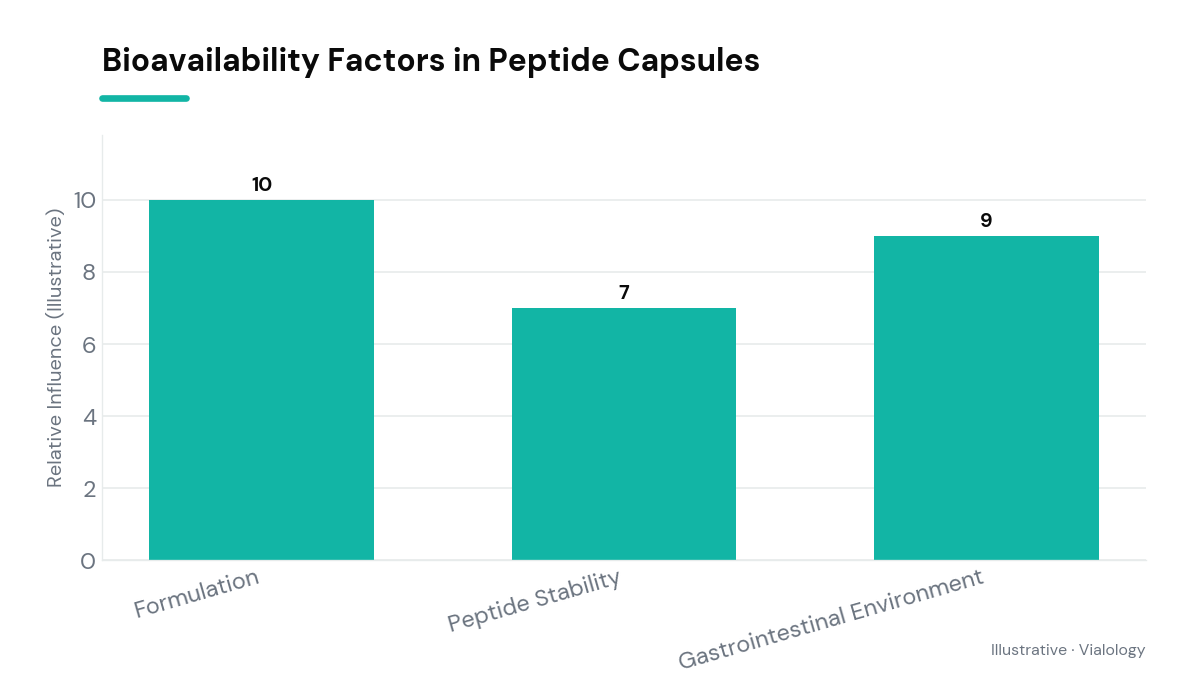
The primary hurdle for any oral peptide capsule is bioavailability, which refers to the percentage of the active compound that successfully enters circulation to exert its effects. In animal models, oral peptides often demonstrate a lower bioavailability compared to their injectable counterparts, sometimes requiring higher initial concentrations to achieve the desired cellular response. Researchers are actively studying whether lipid-based nanocarriers or enzyme inhibitors co-administered in capsules can enhance this absorption profile.
Furthermore, individual metabolic differences, gut health, and whether the capsule is ingested with food can all influence how these peptides are absorbed. Because these compounds are not FDA-approved for general human therapeutic use and remain restricted to research and investigational settings, clinical studies continue to focus on mapping out these metabolic pathways to ensure consistent scientific data.
Future Directions in Oral Peptide Research
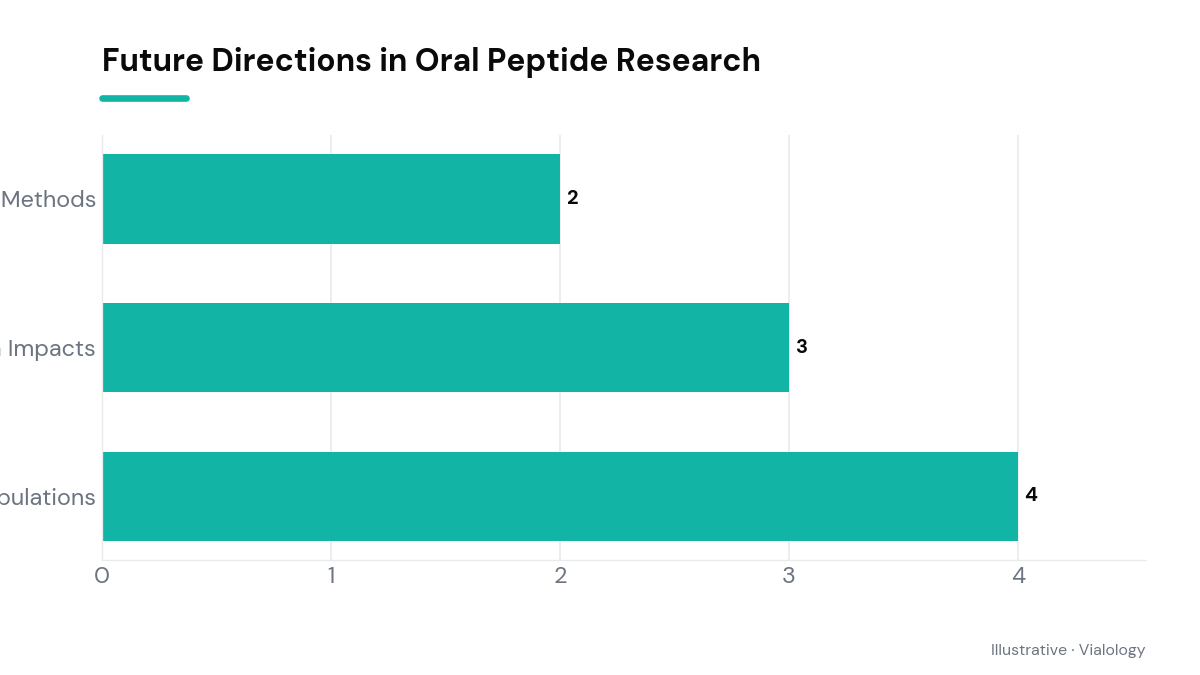
The landscape of peptide science is shifting toward user-friendly oral delivery systems as chemical synthesis techniques become more sophisticated. Current investigations are focused on identifying novel permeation enhancers that temporarily open tight junctions in the intestinal epithelium, allowing larger peptide molecules to pass through safely and predictably. If successful, these developments could redefine how research blends are formulated, offering precise control over systemic exposure.
While the theoretical benefits of these combinations are promising, experts emphasize that long-term human safety trials are still in their infancy. Researchers must continue to monitor the long-term metabolic impacts of combined peptide ingestion to fully understand their safety profiles and potential therapeutic applications in regenerative medicine.
Related on Vialology
Frequently asked questions
What is a typical glow blend dosage in clinical research?
In laboratory and clinical studies, the dosage of a glow blend varies widely depending on the specific peptide concentrations and the animal model or cell culture being evaluated. There is no standardized human dosage, as these research-grade compounds are not FDA-approved for self-administration.
How do oral peptide capsules compare to injectable formats?
Oral capsules offer non-invasive administration but generally face lower bioavailability due to gastrointestinal degradation. Injectable formats bypass the digestive system entirely, delivering the full compound directly into systemic circulation.
Are the ingredients in GLOW blend capsules FDA approved?
Most individual research peptides and proprietary oral peptide blends are classified as investigational compounds and are not approved by the FDA for human therapeutic use.
Educational use only. Vialology publishes journalistic and educational content about peptide science. Nothing here is medical advice, diagnosis, or treatment, and nothing should be taken as an endorsement to use any substance. Many peptides discussed are experimental and are not approved by the FDA for human use. Always consult a licensed healthcare professional before making any health decision.