
Navigating the scientific literature on ipamorelin dosage requires a clear understanding of how this synthetic growth hormone secretagogue interacts with the endocrine system in laboratory settings. As a selective ghrelin receptor agonist, ipamorelin has garnered significant interest from researchers studying cellular repair, muscle metabolism, and growth hormone secretion dynamics. While it remains an unapproved investigational compound not cleared for general clinical use, evaluating how researchers structure experimental protocols provides valuable insights into its pharmacokinetics and biological potential.
Understanding the Mechanism of Ipamorelin
Ipamorelin is a pentapeptide (Aib-His-D-2-Nal-D-Phe-Lys-NH2) that selectively stimulates the secretion of growth hormone by mimicking the action of ghrelin, a naturally occurring hunger hormone. Unlike other secretagogues, ipamorelin is highly selective; early preclinical evaluations, such as a seminal 1998 study published in the European Journal of Pharmacology, demonstrated that it does not significantly trigger the release of other pituitary hormones like cortisol, prolactin, or aldosterone. This selective pathway makes it an attractive tool for researchers aiming to isolate growth-hormone-related metabolic pathways without introducing confounding hormonal variables.
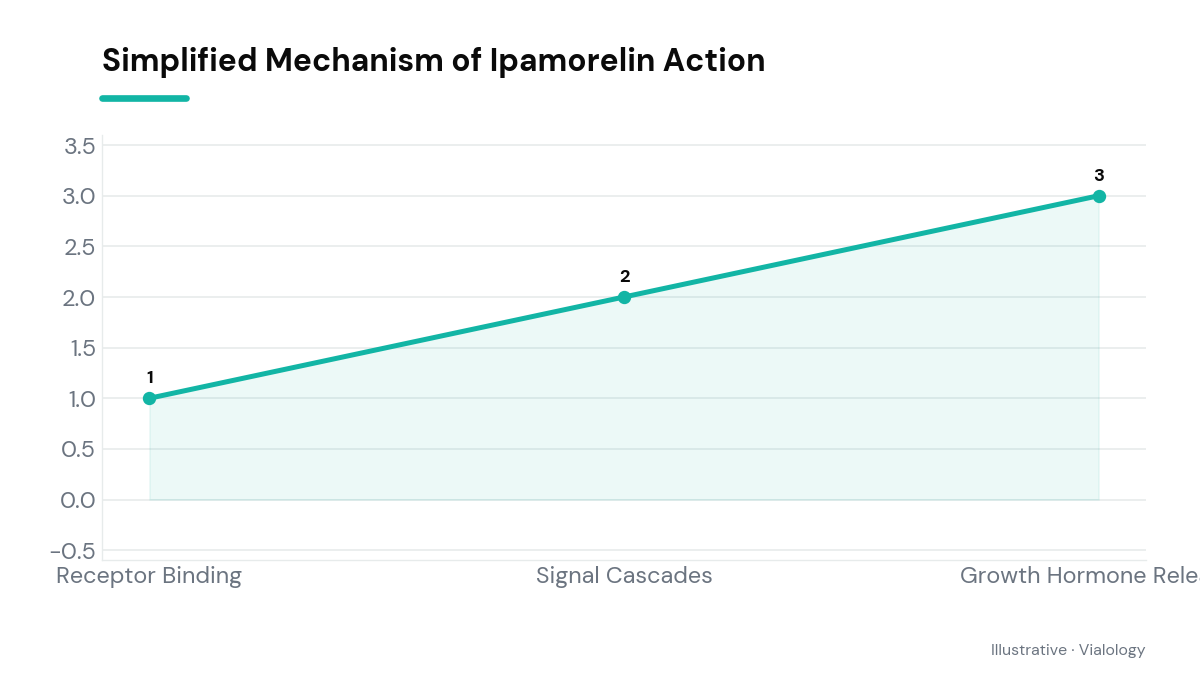
In animal models, the compound binds specifically to the growth hormone secretagogue receptor (GHS-R1a) in both the pituitary gland and the hypothalamus. This binding triggers a pulsatile release of growth hormone rather than a sustained, unnatural spike. By preserving the natural pulsatile rhythm of growth hormone secretion, research models suggest that ipamorelin may offer a more physiological profile compared to older-generation peptides, though long-term human data remains limited.
How Researchers Structure an Ipamorelin Dosage in Studies
Because ipamorelin is not FDA-approved for human therapeutic use, there is no standardized clinical consensus on what constitutes a safe or effective dose. Instead, literature reviews and laboratory protocols typically reference a wide range of experimental concentrations. In historical clinical trials evaluating the peptide for post-operative ileus in the mid-2000s, intravenous infusions were administered in doses ranging from 0.03 mg/kg to 0.09 mg/kg of body weight, revealing dose-dependent growth hormone responses. For more nuanced biochemical context on how these parameters are established in laboratory settings, researchers often consult a comprehensive dosage reference to map out experimental timelines.
In preclinical rodent models, the active dosage is often adjusted to account for accelerated metabolic rates. Scientists frequently document subcutaneous administrations of 100 mcg to 300 mcg per kilogram of body weight to study tissues like bone density and muscle mass preservation. These studies highlight that while the peptide shows high bioavailability when administered parenterally, oral administration is highly inefficient due to rapid enzymatic breakdown in the gastrointestinal tract.
Key Findings from Preclinical and Clinical Trials
The therapeutic potential of ipamorelin has been explored across several domains, particularly bone health and muscle wasting. A 2001 study published in the journal Growth Hormone & IGF Research investigated the effects of ipamorelin on bone mineral density in female rats, finding that sustained administration resulted in a pronounced increase in bone mineral content. This suggested that the downstream activation of insulin-like growth factor 1 (IGF-1) via growth hormone stimulation could play a crucial role in reversing osteopenia.
Despite these promising animal trials, translating these results to human therapies has faced hurdles. Phase II clinical trials in the mid-2000s aimed at treating postoperative bowel dysfunction showed that while ipamorelin was generally well-tolerated, its efficacy did not meet the rigorous endpoints required for widespread regulatory approval. Consequently, contemporary research remains largely restricted to in vitro and animal models focusing on cellular longevity, metabolic regulation, and muscle atrophy prevention.
Safety, Pharmacokinetics, and Research Caveats
From a pharmacokinetic perspective, ipamorelin possesses a relatively short half-life, typically measured at approximately two hours in human subjects. This rapid clearance means that any physiological effects, such as the transient rise in serum growth hormone, return to baseline levels shortly after administration. Researchers must factor this short duration of action into their experimental designs, often utilizing multiple daily administrations to maintain stable biological observations in animal subjects.
While early human data indicated a favorable safety profile with minimal impact on glycemic control or insulin sensitivity, the lack of large-scale, long-term phase III clinical trials means that potential chronic adverse effects remain unknown. Researchers are urged to treat ipamorelin strictly as a research tool. Unregulated use outside of controlled laboratory parameters carries inherent risks, including potential hypothalamic-pituitary-adrenal axis desensitization if administered in excessive amounts over extended durations.
Related on Vialology
Frequently asked questions
What is ipamorelin primarily used for in scientific research?
In scientific settings, ipamorelin is studied for its ability to selectively stimulate growth hormone release, allowing researchers to investigate its effects on muscle preservation, bone density, and metabolic pathways without altering other pituitary hormones.
Is ipamorelin approved by the FDA?
No, ipamorelin is an investigational compound that has not received FDA approval for human use, meaning it remains restricted to laboratory research and clinical studies.
What are the typical side effects observed in ipamorelin studies?
Preclinical and early clinical data indicate that while generally well-tolerated, reported side effects in research settings can include localized injection site irritation, mild headaches, transient flushing, and dry mouth.
How does ipamorelin differ from other growth hormone secretagogues?
Unlike secretagogues such as GHRP-2 or GHRP-6, ipamorelin is highly selective and does not significantly elevate cortisol, prolactin, or ACTH levels, making it a cleaner tool for isolating growth hormone pathways.
Educational use only. Vialology publishes journalistic and educational content about peptide science. Nothing here is medical advice, diagnosis, or treatment, and nothing should be taken as an endorsement to use any substance. Many peptides discussed are experimental and are not approved by the FDA for human use. Always consult a licensed healthcare professional before making any health decision.