
When evaluating tissue repair research, many scientists find themselves looking closely at TB-500 Capsules: What Oral-Format Research Suggests Compared to Injectable Use. While the synthetic peptide fragment TB-500—derived from Thymosin Beta-4—has traditionally been studied via subcutaneous administration, interest in oral formulations is growing. Understanding how oral delivery impacts bioavailability and biological activity is key to interpreting modern peptide literature.
The Biological Mechanism of Thymosin Beta-4 and TB-500
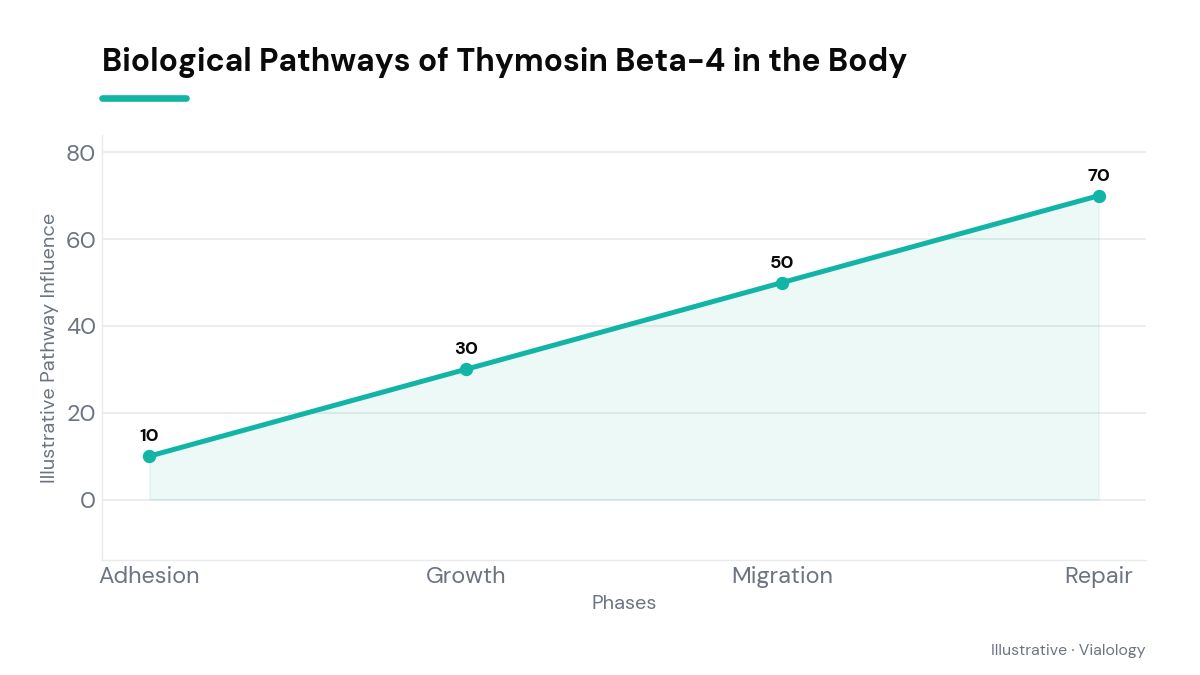
TB-500 is a synthetic peptide that replicates the active region of Thymosin Beta-4 (T̢̂4), a naturally occurring 43-amino acid protein found in high concentrations in various tissues. T̢̂4 plays a fundamental role in cellular migration, wound healing, and angiogenesis—the formation of new blood vessels. In laboratory settings, this protein binds to actin, a major component of the cellular cytoskeleton, promoting cell motility and tissue remodeling.
While T̢̂4 is a larger, full-length protein, TB-500 typically refers to Ac-SDKP or Thymosin Beta-4 fragment 17-23, which retains many of the parent molecule’s regenerative properties. Research spanning the last two decades, including studies published in journals like the Annals of the New York Academy of Sciences, suggests that these fragments can stimulate physiological repair cascades. However, much of the early foundational literature relies on systemic or localized injections to bypass gastrointestinal degradation.
Analyzing TB-500 Capsules: What Oral-Format Research Suggests Compared to Injectable Use
The core challenge of oral peptide administration is the harsh environment of the gastrointestinal tract, where stomach acids and proteolytic enzymes rapidly break down peptide bonds before they can enter systemic circulation. Historically, this meant researchers relied almost exclusively on subcutaneous or intramuscular injections to study TB-500’s systemic effects. Yet, recent advancements in biotechnology have prompted researchers to evaluate how oral delivery might function, particularly when paired with specific protective carriers or molecular modifications.
When looking at oral vs injectable research, scientists note a stark contrast in bioavailability. Injectable formats allow the peptide to enter the bloodstream directly, achieving nearly 100% bioavailability and rapid systemic distribution. In contrast, unmodified oral peptides typically suffer from extremely low absorption rates—often less than 1%—meaning that a significant portion of the compound is degraded in the gut unless formulated with advanced enteric coatings or permeation enhancers that protect the active peptide fragment.
Localized vs. Systemic Effects of Oral Formulations
Interestingly, the degradation of TB-500 in the digestive tract does not necessarily mean an oral format is entirely inactive. Some researchers hypothesize that oral administration could exert localized effects within the gastrointestinal tract itself. Because Thymosin Beta-4 is involved in mucosal healing and anti-inflammatory pathways, oral formulations might interact directly with the gut lining, potentially supporting mucosal barrier integrity in animal models of inflammatory bowel conditions.
However, for systemic indications such as tendon repair, muscle recovery, or joint healing, oral delivery remains a complex hurdle. Without specialized molecular stabilization, the active fragments are unlikely to reach peripheral tissues in therapeutic concentrations. A 2019 review on peptide drug delivery highlighted that while oral peptides are highly desirable for user adherence, engineering them to survive the gastric passage and cross the intestinal epithelium remains one of the most significant challenges in modern pharmacology.
Current Research Limitations and Regulatory Status
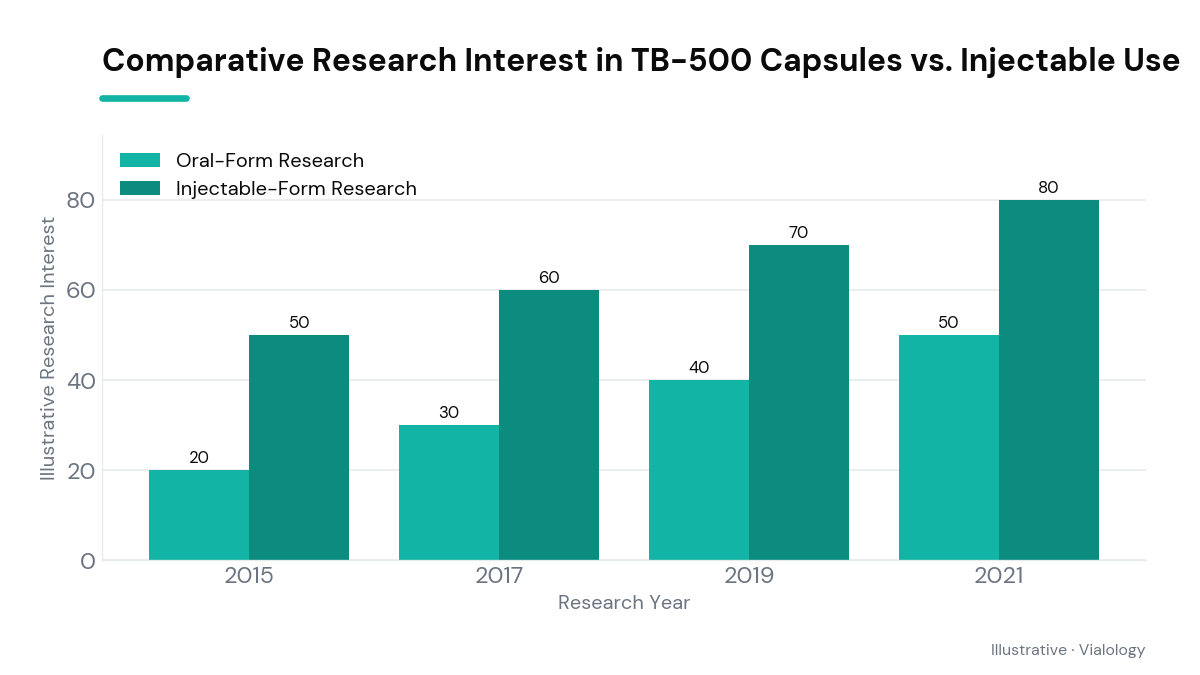
It is critical to emphasize that despite widespread academic curiosity, TB-500 is not approved by the Food and Drug Administration (FDA) for human use or clinical treatment. The vast majority of available data on both injectable and oral TB-500 comes from in vitro cell cultures and animal models, such as rodent wound-healing studies. Robust, large-scale human clinical trials examining the efficacy and safety profile of oral TB-500 capsules are currently lacking.
Furthermore, because TB-500 is frequently prohibited by major athletic organizations, including the World Anti-Doping Agency (WADA) due to its potential to accelerate tissue repair and vascularization, its use is strictly restricted to scientific research environments. Until peer-reviewed human trials directly compare the pharmacokinetic profiles of oral and injectable formats, the scientific consensus remains cautious, viewing oral capsules as an intriguing but unproven frontier in peptide science.
Related on Vialology
Frequently asked questions
Is oral TB-500 as effective as injectable TB-500 in scientific studies?
Research suggests that injectable TB-500 offers significantly higher systemic bioavailability because it bypasses gastric degradation, whereas oral formats typically suffer from rapid breakdown in the digestive tract unless specifically modified.
What is the primary biological function of TB-500?
In laboratory models, TB-500 replicates a fragment of Thymosin Beta-4, which promotes actin binding, cellular migration, angiogenesis, and tissue repair processes.
Has the FDA approved TB-500 capsules for human medical use?
No, TB-500 is not approved by the FDA for human use, and its safety, efficacy, and pharmacokinetic profiles in humans remain unestablished in clinical trials.
Educational use only. Vialology publishes journalistic and educational content about peptide science. Nothing here is medical advice, diagnosis, or treatment, and nothing should be taken as an endorsement to use any substance. Many peptides discussed are experimental and are not approved by the FDA for human use. Always consult a licensed healthcare professional before making any health decision.