
When investigating synthetic regenerative peptides, understanding potential tb-500 side effects is a primary concern for clinical researchers and laboratory scientists. TB-500 is a synthetic peptide sequence derived from the active domain of Thymosin Beta-4, a naturally occurring protein involved in tissue repair and cell migration. Because this compound is not approved by the Food and Drug Administration for human use, analyzing its safety profile requires examining animal trials, early-stage parent-molecule studies, and preclinical literature.
What Does the Scientific Literature Show About TB-500 Side Effects?
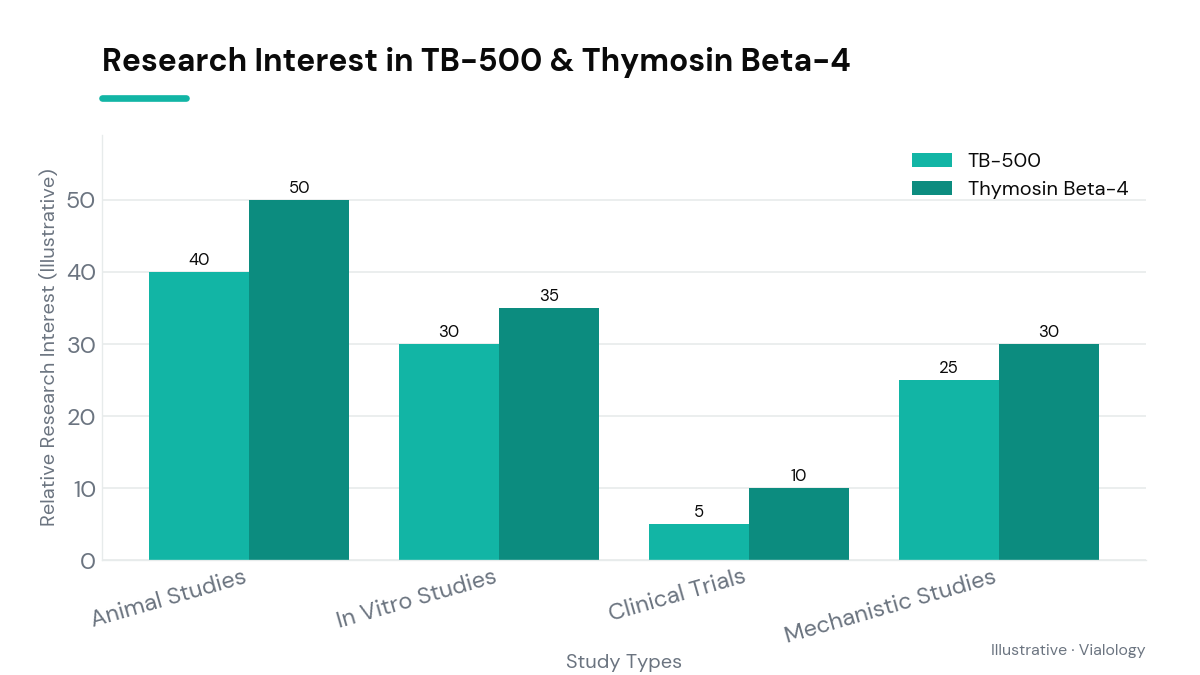
To date, there are no large-scale, published human clinical trials evaluating the specific synthetic fragment known as TB-500. Consequently, much of our knowledge regarding the peptide’s safety profile is derived from veterinary medicine, specifically equine wound-healing models, and mouse studies. In these animal cohorts, researchers have generally noted high tolerability, with few acute adverse physiological reactions reported during standard observational periods.
In early clinical trials evaluating the full-length parent molecule, Thymosin Beta-4, human subjects reported localized and transient reactions. The most common minor issues included localized redness, swelling, and mild irritation at the injection site. Anecdotal researcher surveys and preliminary laboratory reports also document occasional episodes of mild head pressure, temporary dizziness, or transient lethargy immediately following administration, though these occurrences generally resolve without clinical intervention.
The Biological Mechanism Behind Theoretical Long-Term Risks
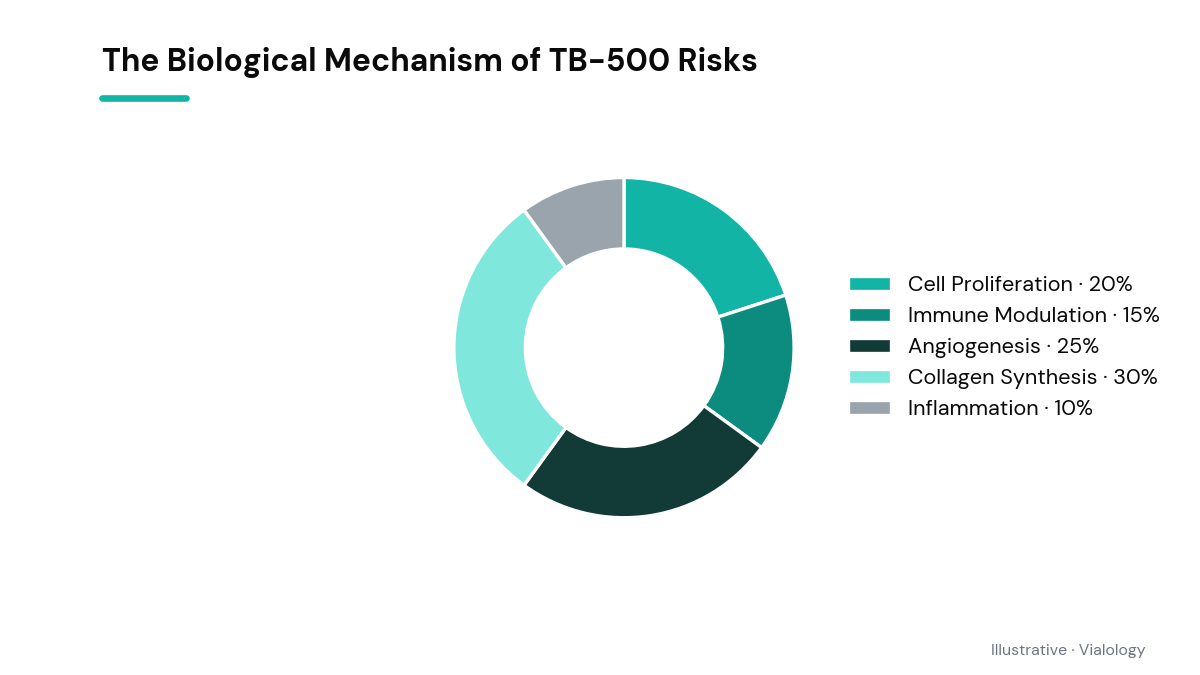
To understand the potential risks of TB-500, scientists examine how the peptide influences cellular biology. TB-500 contains the G-actin-binding domain of Thymosin Beta-4, which directly promotes actin polymerization, cellular migration, and angiogenesis. While these processes are vital for repairing damaged tissues and forming new blood vessels, they have also raised theoretical concerns among oncologists regarding the proliferation of existing abnormal tissues.
Angiogenesis is a process that normal tissues use to heal, but pre-existing tumor cells can also exploit this mechanism to secure their own blood supply and metastasize. Researchers analyzing this summary of cellular interactions emphasize that while TB-500 is not classified as a mutagen—meaning it does not appear to directly cause DNA damage or initiate cancer—its potential to support blood vessel growth means it could theoretically accelerate the progression of pre-existing malignancies. For this reason, laboratory models with active or historical neoplasms are typically excluded from thymic peptide research.

Comparing the Safety of TB-500 and Thymosin Beta-4
It is crucial for researchers to distinguish between TB-500 and full-length Thymosin Beta-4. TB-500 is a truncated synthetic peptide consisting of a specific 7-amino acid sequence (LKKTETQ) found within the larger 43-amino acid Thymosin Beta-4 protein. While Thymosin Beta-4 has successfully progressed through Phase I and Phase II human clinical trials for dry eye syndrome and dermal wound healing with favorable safety outcomes, TB-500 itself has not undergone this same level of formal clinical scrutiny.
Because of its smaller molecular structure, TB-500 possesses distinct pharmacokinetic properties, binding affinities, and systemic clearance rates compared to the parent protein. These structural variations mean that safety data from Thymosin Beta-4 trials cannot be directly translated to TB-500. Scientists must approach TB-500 with caution, acknowledging that its long-term systemic impact, cumulative organ toxicity, and potential interactions in human biology remain largely unquantified.
Regulatory Status and Scientific Constraints
Currently, TB-500 is not approved by the FDA or any other major global regulatory agency for human therapeutic use. It remains classified strictly as an investigational research chemical, restricted legally to laboratory experimentation and in vitro or animal studies. Furthermore, the World Anti-Doping Agency has placed Thymosin Beta-4 and its derivatives on its prohibited substances list, banning its use among competitive athletes due to its potential cellular regenerative properties.
The lack of standardized human trials means that established protocols for monitoring long-term side effects do not exist in mainstream medicine. Scientists looking to evaluate TB-500 must rely on preclinical literature and veterinary data to understand its behavioral threshold. Until structured, double-blind, placebo-controlled clinical trials are conducted in human cohorts, the precise risk-to-benefit ratio of this peptide remains speculative.
Related on Vialology
Frequently asked questions
Is TB-500 FDA-approved for human therapeutic use?
No, TB-500 is not approved by the FDA or any other global regulatory authority for human consumption, prescription, or therapeutic use, and is classified strictly as a research chemical.
What are the most common mild side effects associated with TB-500?
In laboratory studies of its parent molecule, researchers frequently report localized injection site irritation, redness, transient head pressure, and temporary lethargy.
Can TB-500 cause cancer?
Current research does not indicate that TB-500 initiates cancer, but its ability to stimulate angiogenesis has raised theoretical concerns that it could potentially accelerate the growth of existing tumors.
How does TB-500 differ from Thymosin Beta-4?
TB-500 is a short, synthetic peptide fragment representing the active region of Thymosin Beta-4, whereas Thymosin Beta-4 is the complete, naturally occurring 43-amino acid protein.
Educational use only. Vialology publishes journalistic and educational content about peptide science. Nothing here is medical advice, diagnosis, or treatment, and nothing should be taken as an endorsement to use any substance. Many peptides discussed are experimental and are not approved by the FDA for human use. Always consult a licensed healthcare professional before making any health decision.