
Welcome to our foundational peptide stacking guide, designed to explore how laboratory researchers combine different peptide compounds to investigate synergistic biological effects. In cellular and animal models, investigators often study multiple signaling pathways simultaneously rather than relying on a single agent. Understanding these combined methodologies helps clarify how modern peptide research is evolving toward multi-pathway research designs.
The Science of Synergy in Peptide Research
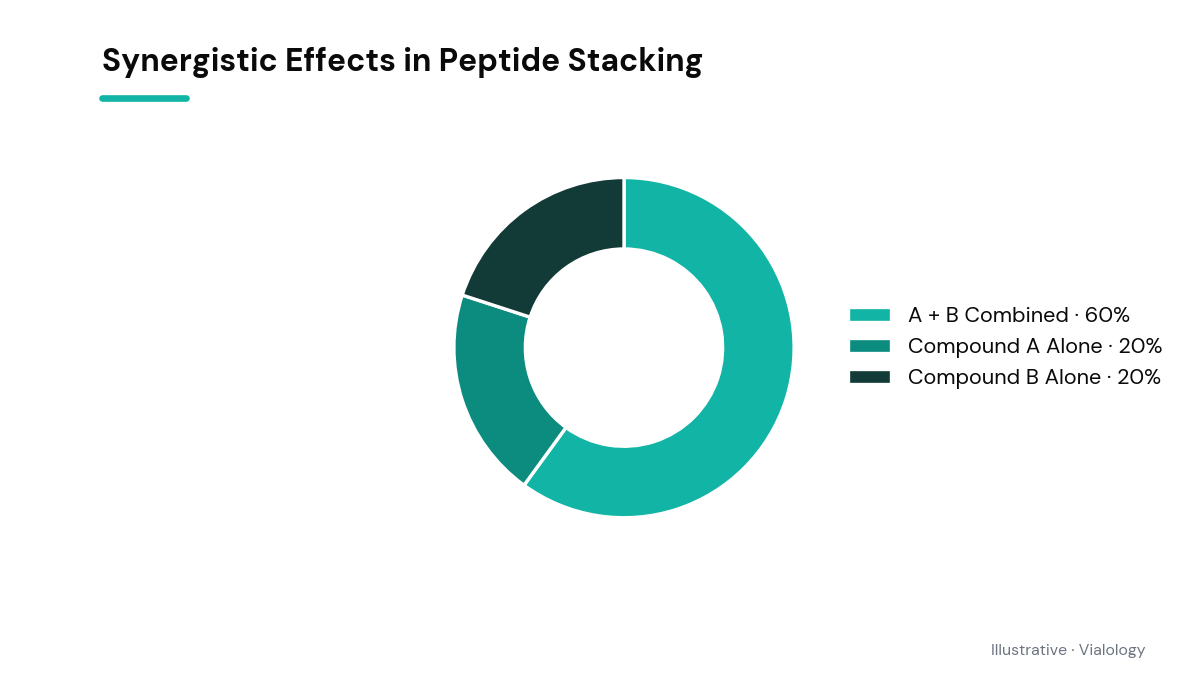
In the landscape of endocrinology and molecular biology, physiological processes rarely rely on a single, isolated signal. Instead, the human body coordinates complex cascades of hormones and cellular messengers to maintain homeostasis. In laboratory research, the strategy of combining multiple compounds—frequently referred to as stacking—is employed to mimic these natural, multi-faceted signaling networks. By introducing two or more peptides simultaneously, researchers can observe whether the compounds act synergistically to produce a biological response greater than the sum of their individual effects.
A classic example of this methodology involves the co-administration of growth hormone-releasing hormones (GHRHs) and growth hormone secretagogues (GHSs). In animal models, combining a GHRH like CJC-1295 with a GHS like Ipamorelin has been shown to amplify growth hormone release. While the GHRH stimulates the pituitary gland to produce hormone pulses, the GHS simultaneously inhibits somatostatin (the hormone that blunts growth hormone release) and mimics ghrelin to trigger additional release. This dual-action approach allows researchers to study maximum endocrine signaling efficiency without escalating the dosage of a single compound to potentially toxic levels.
Evaluating Multi-Compound Research: A Peptide Stacking Guide
Another prominent area of combination study focuses on tissue repair and musculoskeletal recovery. Researchers frequently pair BPC-157, a pentadecapeptide derived from human gastric juice, with Thymosin Beta-4 (or its synthetic fragment, TB-500). While both are investigated for wound-healing potential, they operate via entirely distinct mechanisms. BPC-157 is studied for its ability to upregulate growth hormone receptors and promote angiogenesis (the formation of new blood vessels), whereas TB-500 is primarily researched for its role in actin regulation, which facilitates cell migration to injured sites.
To explore high-quality reference materials for these experimental designs, researchers often turn to established industry resources like Omnix Peptides to source highly purified compounds for laboratory evaluation. By examining how these standardized agents operate in tandem, scientists can better map the cascade of healing and inflammatory responses in pre-clinical models. Combining these distinct biological pathways helps researchers determine if simultaneous tissue remodeling and blood vessel growth yield superior repair outcomes compared to single-compound interventions.
Methodological Challenges in Combination Study Designs
While combining peptides offers a compelling framework for studying complex biological systems, it introduces significant methodological challenges. The primary obstacle lies in pharmacokinetics and pharmacodynamics (PK/PD). Peptides naturally vary widely in their half-lives; some degrade within minutes of introduction, while others are chemically modified to resist enzymatic breakdown for days. Calibrating the administration timing is critical to ensure that both compounds are active in the target tissue at the same time to allow for meaningful interaction analysis.
Furthermore, researchers must account for the risk of receptor desensitization or competitive inhibition. If two peptides target the same receptor family, they may compete for binding sites, effectively blunting the efficacy of the protocol. Consequently, robust study designs typically select peptides that utilize entirely separate, non-overlapping receptor systems. This separation ensures that one compound does not inadvertently downregulate or block the cellular pathways activated by the other, preserving the integrity of the experimental data.
Regulatory Realities and the Future of Peptide Science
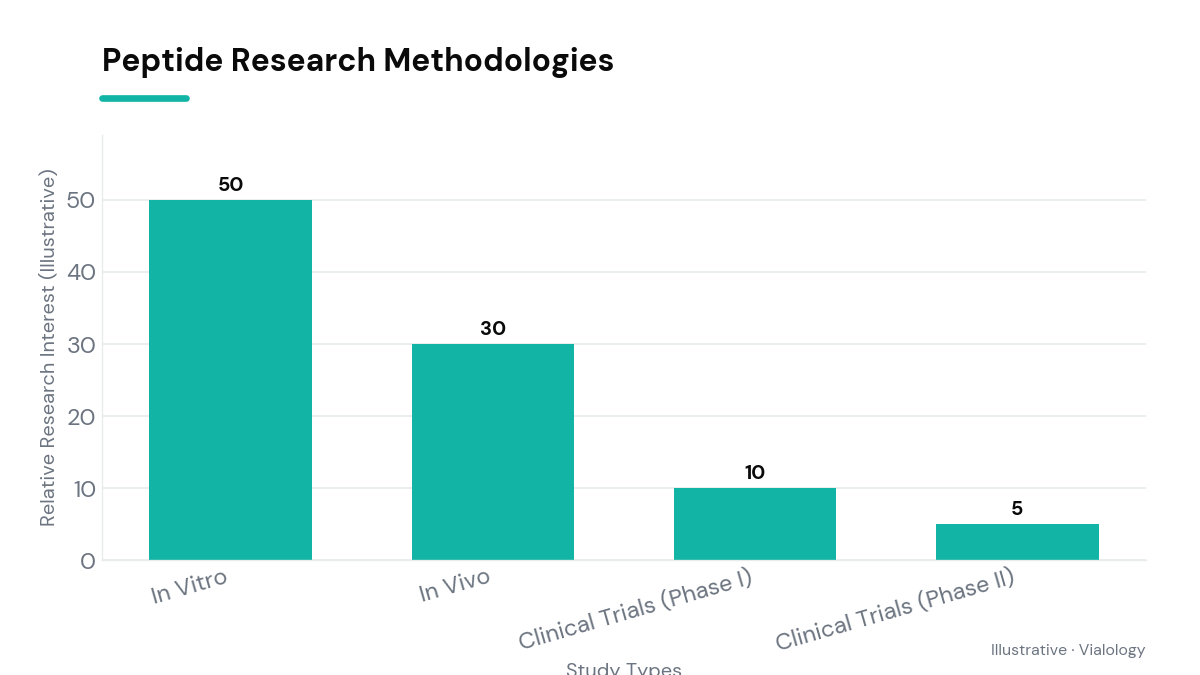
It is essential to note that the vast majority of peptide combinations discussed in academic literature are confined to in vitro experiments and animal models. Most of these investigational compounds have not been approved by the FDA for human use, and their combined safety profiles in humans remain largely uncharacterized. The unpredictability of multi-compound interactions means that pre-clinical safety screenings are mandatory before any translational human trials can be safely proposed.
Looking forward, the evolution of peptide science may transition from physical co-administration to the synthesis of chimeric or multi-functional peptides. These single, engineered molecules are designed to possess multiple active domains capable of binding to different receptors simultaneously. Until such molecular engineering becomes mainstream, carefully structured multi-peptide research protocols remain the primary mechanism for scientists seeking to map the complex, overlapping networks of cellular communication.
Related on Vialology
Frequently asked questions
What is the primary goal of combining peptides in a research setting?
The primary goal is to study synergistic biological effects by simultaneously targeting complementary cellular pathways, which often produces a more robust response than utilizing a single compound.
Are these peptide combinations FDA-approved for human use?
No, the majority of these peptide combinations are investigational compounds intended solely for laboratory research and have not been approved by the FDA for therapeutic use in humans.
How do researchers prevent receptor desensitization when studying multiple peptides?
Researchers prevent desensitization by selecting compounds that target distinct, non-overlapping receptor pathways, ensuring the peptides do not compete for the same cellular binding sites.
What are the main experimental challenges of combination peptide protocols?
The main challenges include managing differing half-lives to ensure simultaneous tissue activity, navigating complex pharmacokinetic interactions, and accurately isolating the biological effects of each individual agents produce.
Educational use only. Vialology publishes journalistic and educational content about peptide science. Nothing here is medical advice, diagnosis, or treatment, and nothing should be taken as an endorsement to use any substance. Many peptides discussed are experimental and are not approved by the FDA for human use. Always consult a licensed healthcare professional before making any health decision.