

The landscape of cognitive enhancement and neuroprotection research is expanding rapidly, with scientists looking closely at Cognitive Research Peptides Beyond Semax and Selank: What Else Is Being Studied in preclinical models and clinical trials. While those two classic Russian-developed compounds have long dominated conversations around peptide-based nootropics, modern neuroscience is exploring a diverse array of alternative molecules. These newer candidates aim to target neurotrophic factors, reduce neuroinflammation, and support synaptic plasticity through distinct biochemical pathways.
FGL: Mimicking Neural Growth Factors
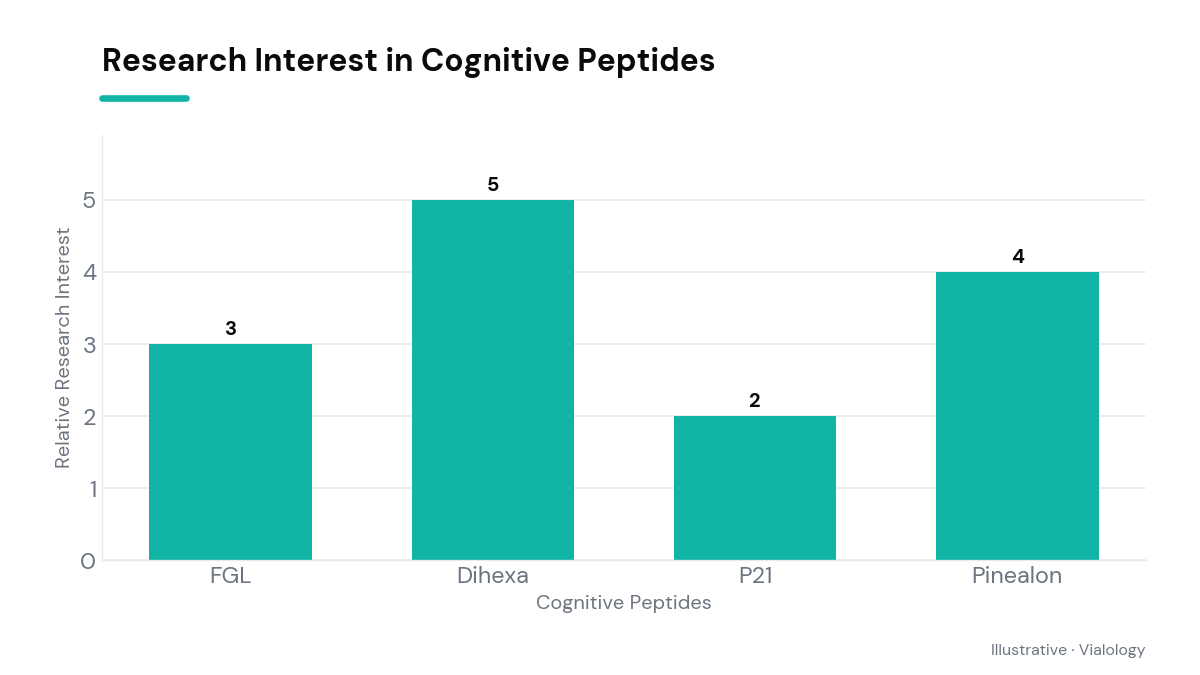
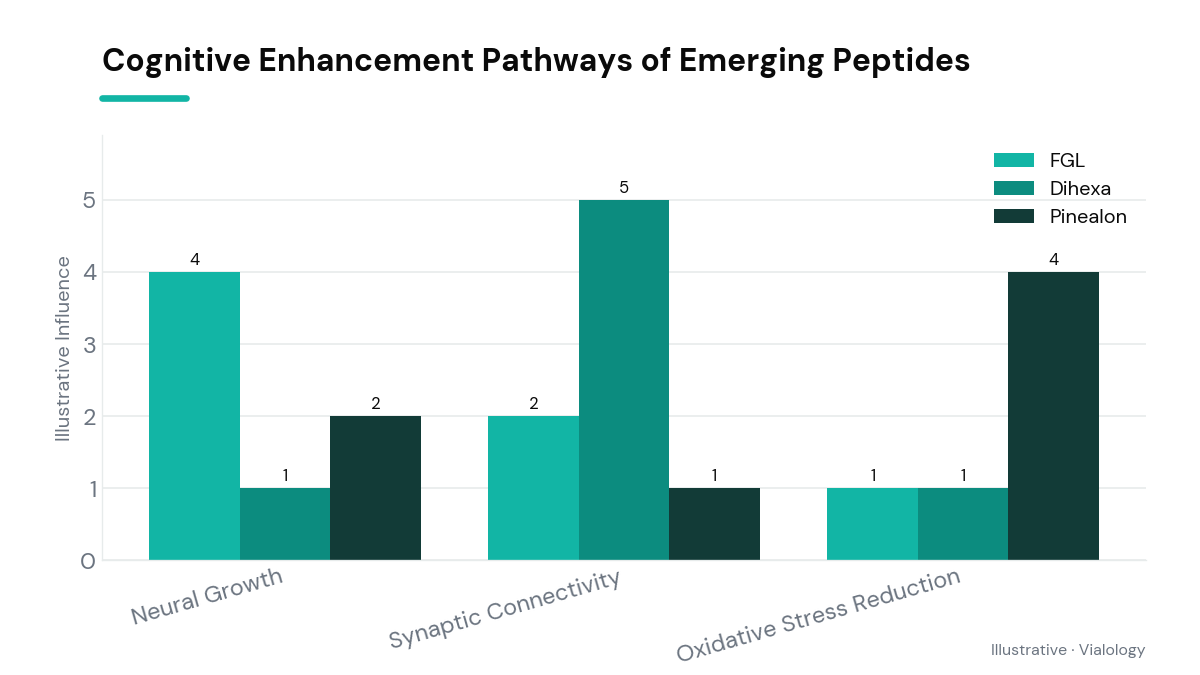
One of the most intriguing candidates in the realm of cognitive research is FGL (Fibroblast Growth Factor Receptor-1 Agonist). FGL is a synthetic peptide derived from the neural cell adhesion molecule (NCAM). In laboratory settings, this peptide has been studied for its ability to bind to and activate the FGFR1 receptor, which initiates a cascade of intracellular signals crucial for cell survival and synaptic plasticity. Researchers are particularly interested in how FGL might facilitate the growth of new dendrites and synapses, which are fundamental to learning and memory formation.
In animal models of cognitive decline and neurodegeneration, FGL has demonstrated some promising neuroprotective qualities. A 2008 study published in The Journal of Neuroscience indicated that FGL administration in rats improved spatial memory and promoted synaptic restructuring in the hippocampus. Although human clinical trials remain limited, the compound continues to serve as an important tool for understanding how mimicking natural cell adhesion molecules can support brain health under stress.
Dihexa: A Focus on Synaptic Connectivity
Developed at Washington State University, Dihexa is an oligopeptide drug candidate derived from angiotensin IV. Unlike traditional neurotrophic factors, which are often too large to cross the blood-brain barrier effectively, Dihexa was specifically designed to be highly permeable. It acts as an incredibly potent agonist of the hepatocyte growth factor (HGF) receptor, also known as c-Met. Researchers are investigating Dihexa for its capacity to promote spinogenesis—the formation of new dendritic spines—and build new functional synapses in damaged neural pathways.
While much of the early hype around Dihexa stems from preclinical animal studies of Alzheimer’s disease models, rigorous clinical data in humans is still in its infancy. To better understand these novel peptides beyond Semax and Selank, scientists are turning their attention to several promising neuroprotective agents currently under investigation. These studies help map out how small molecules can theoretically repair disrupted neural networks without triggering adverse systemic side effects, although safety profiles in humans are not yet fully established.
Investigating P21 and Cognitive Research Peptides Beyond Semax and Selank
Another peptide capturing the attention of the scientific community is P21, a synthetic derivative of ciliary neurotrophic factor (CNTF). P21 is engineered to mimic the active region of CNTF, a naturally occurring protein that plays a key role in the survival of neurons and astrocytes. Preclinical research suggests that P21 can boost the levels of brain-derived neurotrophic factor (BDNF) and neurotrophin-3, essentially acting as a catalyst for neurogenesis—the birth of new brain cells—in the dentate gyrus of the hippocampus.
By encouraging the proliferation and differentiation of neural progenitor cells, P21 has shown the potential to restore cognitive function in mice engineered with age-related cognitive deficits. However, because these studies are restricted to animal models, regulatory bodies such as the FDA have not approved P21 for human use. Researchers emphasize that while the mechanism of action is highly encouraging for future therapeutics, extensive safety and efficacy trials in humans are still required to validate these early findings.
Pinealon: Short-Chain Peptides and Oxidative Stress
Pinealon is a synthetic tripeptide composed of glutamic acid, aspartic acid, and arginine (Glu-Asp-Arg) that has been studied primarily in Eastern Europe for its potential role in protecting brain tissue from oxidative stress and hypoxia. Because of its ultra-short molecular chain, Pinealon is believed to easily penetrate the blood-brain barrier and directly interact with cellular DNA, potentially modulating the expression of genes involved in cellular defense and aging.
In vitro and animal studies suggest that Pinealon can help reduce the accumulation of reactive oxygen species (ROS) in brain cells, thereby protecting mitochondrial function during periods of metabolic stress. While these cellular protection mechanisms offer an intriguing look at how short-chain peptides can influence epigenetic pathways, the lack of large-scale, double-blind human trials means Pinealon remains classified purely as a research chemical rather than an established cognitive enhancer.
Related on Vialology
Frequently asked questions
Are these novel cognitive peptides approved by the FDA?
No, none of the experimental cognitive peptides mentioned, such as FGL, Dihexa, or P21, are currently approved by the FDA for human use or therapeutic treatment.
How do these peptides cross the blood-brain barrier?
Many of these research compounds, such as Pinealon and Dihexa, are engineered as ultra-short chains or small molecules specifically designed to penetrate the blood-brain barrier more easily than larger endogenous proteins.
What is the primary difference between these compounds and Semax?
While Semax primarily modulates melanocortin receptors and neurotransmitter systems, alternative research peptides like Dihexa and FGL target growth factor receptors to promote the physical structural growth of synapses and neurons.
Educational use only. Vialology publishes journalistic and educational content about peptide science. Nothing here is medical advice, diagnosis, or treatment, and nothing should be taken as an endorsement to use any substance. Many peptides discussed are experimental and are not approved by the FDA for human use. Always consult a licensed healthcare professional before making any health decision.