
Investigating the clinical application of nicotinamide adenine dinucleotide requires a close look at how researchers establish an experimental nad+ dosage in clinical trials. As a vital coenzyme present in all living cells, NAD+ plays a critical role in maintaining mitochondrial health and cellular energy production. Examining the specific quantities and delivery methods utilized in published studies provides valuable insight into how scientists currently map its therapeutic potential.
Intravenous Research Protocols for NAD+
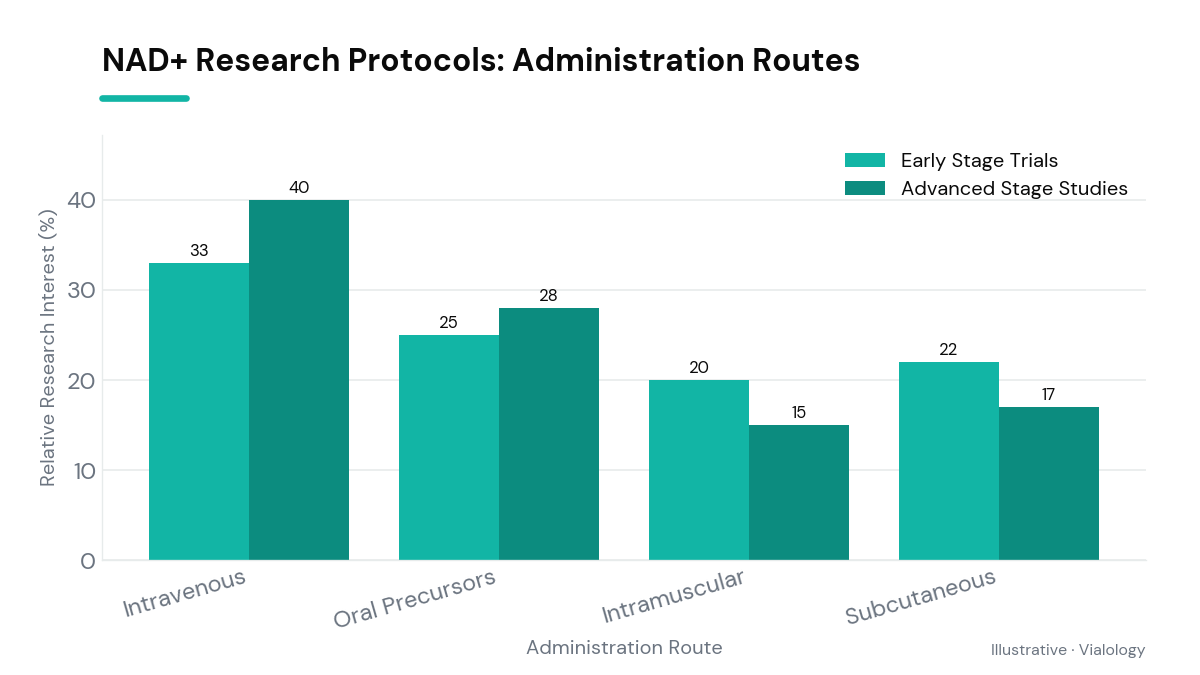
In clinical settings, intravenous (IV) infusion is one of the most widely documented methods for studying NAD+ biology. Because oral NAD+ is rapidly metabolized by the digestive tract, researchers often opt for direct systemic delivery to achieve measurable increases in plasma levels. A landmark 2019 study evaluated the safety and kinetics of a 750 mg intravenous infusion of NAD+ in a cohort of healthy male participants over an eight-hour period, noting that plasma levels did not significantly rise until after the two-hour mark.
Another pilot study in 2021 investigated lower-dose infusions, typically ranging from 250 mg to 500 mg, administered over shorter durations of three to four hours. Investigators noted that slower infusion rates generally mitigated transient side effects, such as mild chest pressure or abdominal cramping, which are occasionally reported during rapid delivery. By analyzing these clinical trials, scientists are beginning to map the pharmacokinetics of IV administration, though standardized therapeutic guidelines have yet to be established.
Oral Precursors and the Quest for Efficient NAD+ Dosage
Because direct oral administration of NAD+ is largely inefficient due to degradation in the gastrointestinal tract, researchers frequently turn to its intermediate precursors, nicotinamide mononucleotide (NMN) and nicotinamide riboside (NR). When exploring an optimal nad+ dosage reference in clinical literature, oral studies using NR typically employ doses ranging from 250 mg to 1,000 mg per day. A 2018 randomized controlled trial demonstrated that daily oral administration of 1,000 mg of NR safely and effectively increased the blood NAD+ metabolome in healthy older adults by approximately 60 percent.
Similarly, clinical trials investigating NMN have utilized daily oral doses ranging from 250 mg to 1,250 mg. A 2021 study evaluated the safety of single oral doses up to 500 mg of NMN, finding it to be well-tolerated without significant adverse effects. These precursor-based research protocols offer a non-invasive alternative to direct NAD+ infusions, allowing investigators to study long-term cellular maintenance and mitochondrial health in larger human cohorts over several weeks or months.

Intramuscular and Subcutaneous Research Trends
Beyond intravenous and oral pathways, some pre-clinical and clinical investigations explore intramuscular (IM) and subcutaneous (SC) injection protocols. These methods bypass the digestive system entirely, offering a potentially more direct route to the bloodstream than oral ingestion, while being less time-consuming than multi-hour IV infusions. In animal models, researchers frequently utilize subcutaneous injections of NAD+ or its precursors to evaluate rapid cellular uptake and its subsequent effects on metabolic markers.
In human-focused pilot studies, investigator-led protocols have occasionally documented the use of IM injections ranging from 50 mg to 200 mg per session. However, peer-reviewed literature on the precise pharmacokinetics of subcutaneous and intramuscular NAD+ in humans remains limited compared to the robust data available for oral precursors. Researchers emphasize that further controlled clinical trials are necessary to determine the exact bioavailability and tissue distribution of these injection methods.
Factors Influencing Experimental Parameters
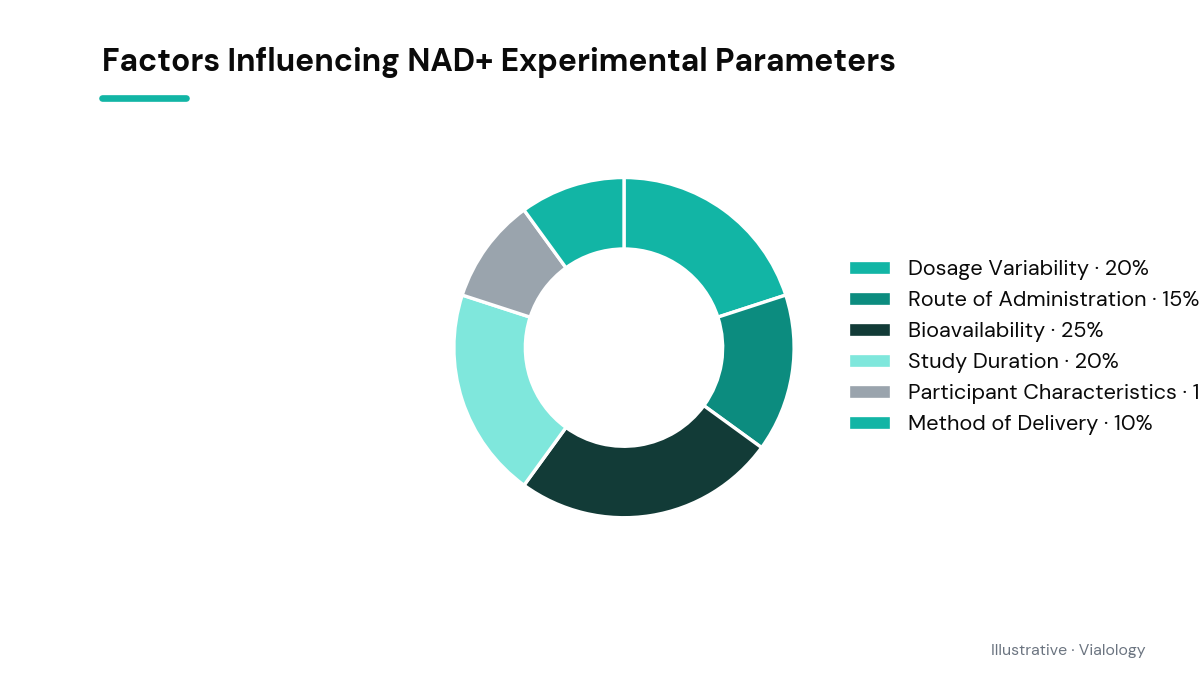
When designing studies, researchers must balance several biological variables that influence the efficacy of an NAD+ protocol. Age, baseline metabolic health, and the specific tissues being targeted all dictate the chosen concentration and frequency of administration. For instance, preclinical trials focusing on age-related cognitive decline in rodent models often require higher relative doses to penetrate the blood-brain barrier effectively, whereas studies focusing on peripheral muscle tissue may utilize more conservative amounts.
Furthermore, the safety profile of high-dose NAD+ remains an active area of investigation. While current human trials involving daily oral precursor doses up to 1,000 mg and single IV infusions of 750 mg have demonstrated favorable tolerability, long-term safety data extending beyond a few months is still scarce. As research progresses, scientists continue to emphasize that individual physiological differences mean there is no single, universally applicable protocol, and that the compound remains unapproved by the FDA for treating specific age-related conditions.
Related on Vialology
Frequently asked questions
What is the typical dose of NAD+ used in intravenous research?
In clinical research, intravenous protocols commonly utilize doses of 250 mg to 750 mg of NAD+ administered slowly over several hours to monitor safety and cellular absorption.
How do oral precursor doses compare to direct NAD+ research doses?
While direct NAD+ is rarely given orally due to poor bioavailability, studies on its oral precursors, NMN and NR, typically evaluate daily doses between 250 mg and 1,000 mg to successfully raise systemic NAD+ levels.
Has the FDA approved a standard daily dose for NAD+?
No, the FDA has not established a recommended daily intake or approved a standardized dosage for NAD+ or its precursors, as they are currently classified as investigational compounds or dietary supplements.
Educational use only. Vialology publishes journalistic and educational content about peptide science. Nothing here is medical advice, diagnosis, or treatment, and nothing should be taken as an endorsement to use any substance. Many peptides discussed are experimental and are not approved by the FDA for human use. Always consult a licensed healthcare professional before making any health decision.